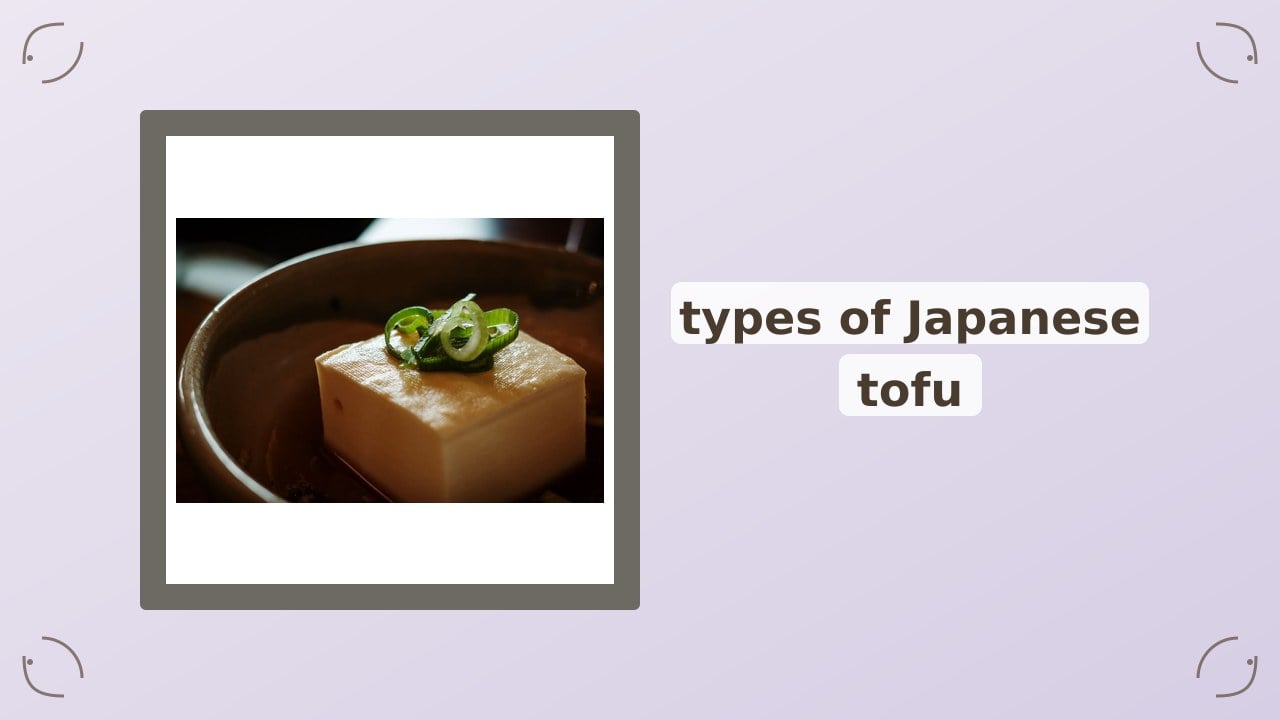
Standard Momen still earns its place in everyday cooking as one of the top Japanese tofu brands. It’s the reliable block: familiar, useful, and priced for regular meals. In 2026, though, the tofu aisle stretches well beyond that baseline, from 286-yen blocks to novelty products such as the “foie gras-style” variety, which imitates a luxury ingredient.
The shift isn’t limited to rare imports. Walk into a convenience store and you’ll find Asahico’s Tofu Bar for 140 yen, a soy-curd snack designed to be eaten on the go rather than simmered into dinner.
Basic tofu still wins on price, often costing under 100 yen, and standard momen or silken tofu is dependable for everyday, budget-friendly cooking. No prep tonight? Convenience store shelves may have the better answer.
Verdict: Essential Staple with Premium Innovations
A standard 1kg block of firm tofu averages 286 yen in mid-2026. Even after inflation, that’s less than most animal proteins, so it still fits comfortably into everyday cooking. At the premium end, though, soybean curd is becoming something less predictable.
Basic tofu still delivers unusually inexpensive protein.
Prices have climbed with input costs, but the cost of ordinary nutrition hasn’t spiraled. At most retailers, a 300g pack of silken tofu remains roughly 75 to 81 yen.
That low price matters at the dinner table. Tofu brings protein, takes on sauces and seasonings readily, and barely moves the grocery bill.
Convenience is pushing Juten tofu and snackable bars into view.
The shelf is changing. Ready-to-eat formats now claim more space, including Asahico’s Tofu Bar under Seven Premium. Savory versions cost 140 yen, while dessert varieties such as Strawberry Soy Latte cost 192 yen.
Sagamiya’s Hitori Nabe series had shipped over 250 million packs by late 2025. These single-serve products remove the preparation step and make tofu a meal rather than merely an ingredient.
Choose standard Momen for familiar cooking, or Beyond Tofu for novelty.
Standard Momen is the safer choice when texture matters, as is Otokomae Tofuten’s Ken-chan series. Both stay intact in simmered dishes and provide the chewy bite that silken tofu can’t offer.
Beyond Tofu goes somewhere stranger. Sagamiya launched its “foie gras-style” variant in April 2025, after releasing “shirako-style” in July 2024. These products imitate luxury textures instead of traditional bean flavors.
They’re not for purists, but adventurous shoppers get something far removed from the usual block of tofu.
Standard Variants Define the Daily Diet
Three tofu styles do most of the work in Japanese supermarket refrigerators in 2026. Texture comes first, although storage life can matter just as much. These are everyday staples, chosen for how reliably they behave in the pan, pot, or serving dish.
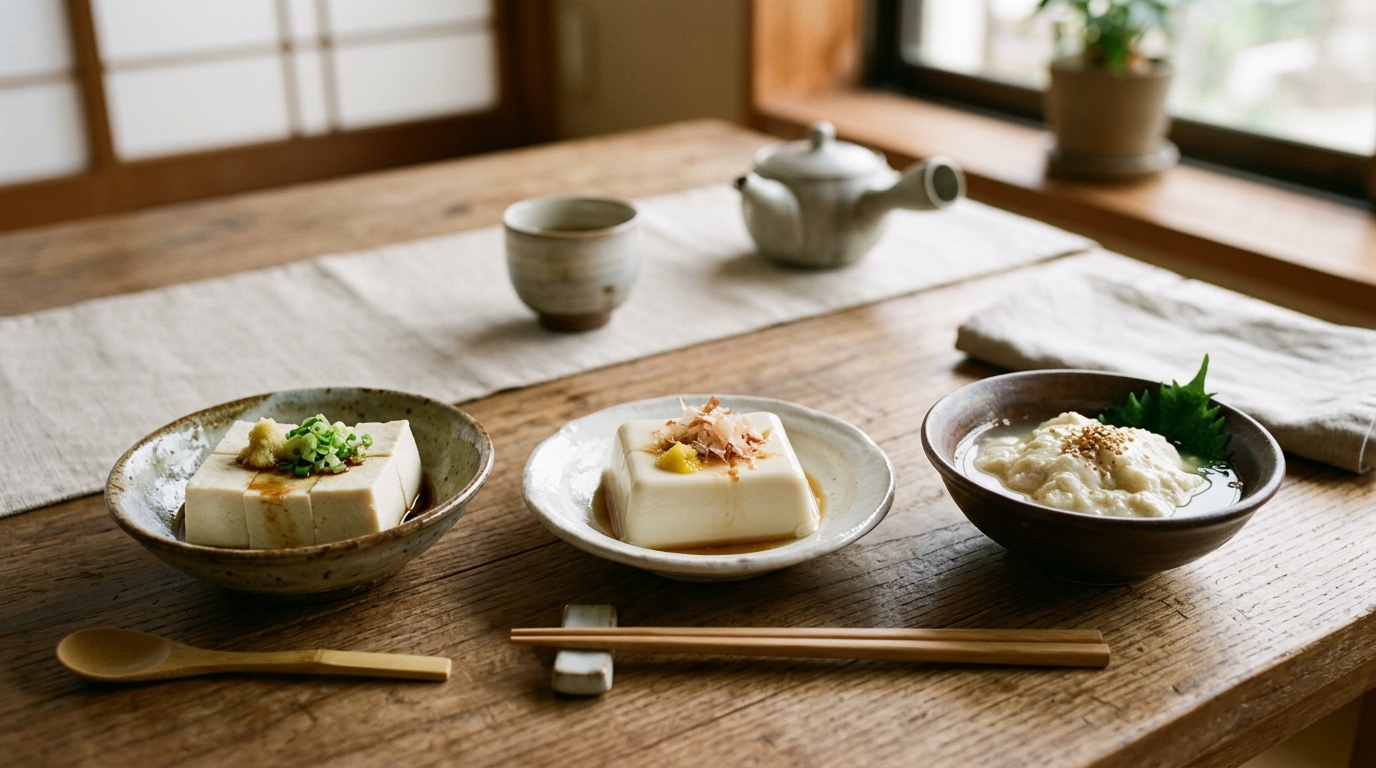
Kinugoshi silken tofu keeps cold dishes smooth and delicate.
Unpressed and set directly in its container, kinugoshi has a custard-like consistency that breaks under heavy stirring. That fragility is part of its appeal. In hiyayakko, for example, the mild tofu leaves space for ponzu or grated ginger rather than competing with them.
Takano Foods’ Kinu-bijin is one brand aimed at shoppers who want that silky texture. A 300g pack costs 75 to 81 yen, so it remains an inexpensive choice for a quick meal. Handle it carefully.
Rough preparation can turn the smooth block into a mess.
Momen tofu costs about 286 yen per kilogram and stands up to heat.
Pressed to remove excess water, momen, or firm tofu, develops a porous texture that survives boiling and frying. It absorbs dashi and soy sauce without collapsing, which explains its regular appearances in miso soup and nimono.
Mid-2026 pricing puts a standard 1kg block at an average of 286 yen. That supplies substantial protein for a fraction of the cost of meat. The price has stayed fairly stable, and shoppers continue to reach for it even while other grocery bills climb.
Juten packaged tofu trades fresh-market character for a longer shelf life.
Instead of sitting in a water bath, juten tofu is sealed in aseptic packs. Before opening, those packs can last for weeks unrefrigerated. That detail is useful in small apartments and for people living alone, where limited refrigerator space and forgotten leftovers can quickly become a problem.
Its texture is slightly denser than fresh kinugoshi. Still, the convenience often wins repeat buyers. Some households would rather keep tofu available for weeks than chase the freshness associated with traditional market tofu.
Convenience Stores Drive Snack Innovation
Tofu has left the soup bowl. Convenience stores now sell savory bars that turn the traditional staple into a portable, ready-to-eat source of protein, and some versions lean distinctly sweet.
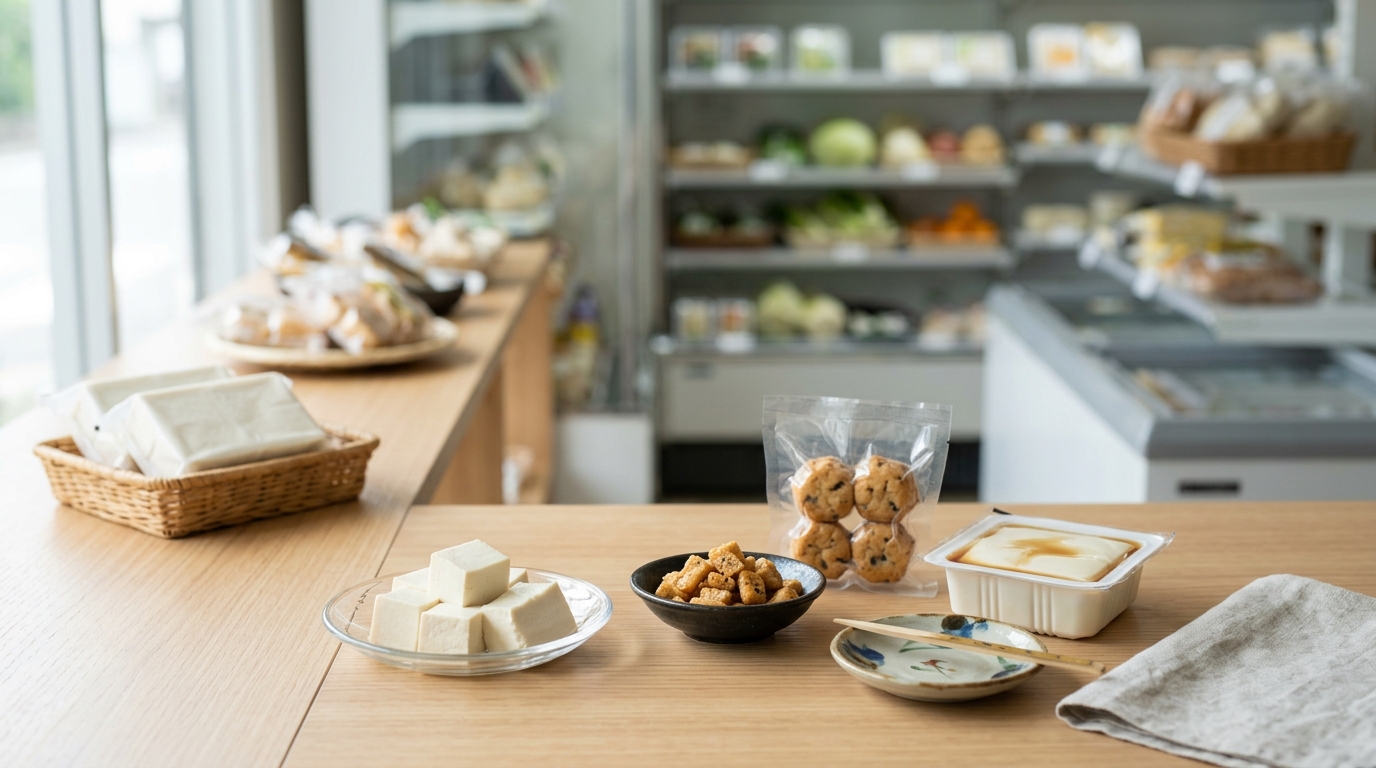
Asahico Tofu Bars offer portable protein for 140 yen.
At 140 yen including tax, Asahico’s Tofu Bar is an inexpensive savory snack. It’s also sold under the Seven Premium label and can be found at major chains such as Seven-Eleven, Lawson, and FamilyMart.
No draining. No seasoning. The firm texture holds up without refrigeration until opened, making the bar easy to tuck into a desk drawer or gym bag.
Open the package and eat.
Seven Premium Sweets Bars bring tofu into dessert territory.
Tofu works in a different register here. Flavors such as Strawberry Soy Latte cost around 192 yen including tax and borrow the creamy feel of dairy desserts while keeping their plant-based profile.
The result isn’t quite a traditional cake, which is part of the appeal. Instead, the bar offers a lighter way to satisfy a dessert craving, using tofu as the base rather than limiting it to dishes such as miso soup.
Ready-to-eat bars suit busy shoppers.
Standard blocks of tofu need draining and seasoning. These bars don’t.
That small change gives convenience stores a new format for protein: compact, ready to eat, and suited to shoppers who don’t have time to prepare a block of tofu before eating it.
Gourmet Lines Mimic Luxury Ingredients
Sagamiya’s Beyond Tofu line starts with ordinary soybean curd and pushes it toward decidedly less ordinary territory. The trick isn’t where it comes from. It’s how the tofu feels.
Uni and shirako textures, reworked for the home kitchen
Try the “Uni-like” version and you get sea urchin’s creamy, faintly granular mouthfeel rather than a generic soft tofu texture. The “Shirako-like” variant arrived in July 2024, bringing a delicate, soft burst modeled on fish milt. For home cooks, that means recreating those particular sensations without buying or handling raw seafood.
Foie gras-like tofu brings richness to the pan
The “Foie gras-like” version was released in April 2025. It’s dense and buttery, with enough structure to hold up to searing, while the fat-coated mouthfeel supports gourmet-style plating without actual foie gras. That’s the practical appeal: less animal product, but not necessarily a less indulgent bite.
Specialized tofu costs more
There’s a reason these packs sit above standard tofu on the price ladder. Producing such distinct textures requires precise coagulation control, and the line’s limited production runs and niche R&D focus add further cost. A basic 300g silken pack runs around 75 to 81 yen.
The gourmet variants cost more.
Market Shifts Reflect Economic Pressures
A 1kg block of firm tofu now averages 286 yen. That’s a sharp jump for a basic food, driven by pricier soybeans and higher energy bills that are ultimately reaching shoppers.
Costs rose, and major manufacturers raised prices by up to 15 percent in 2026.
Sagamiya and other large producers point to higher soybean import costs alongside rising energy expenses. They couldn’t keep absorbing both indefinitely without changing how they operate.
National brands have been inching upward in price. The increase stands out most with bulk packs bought for hot pot, especially compared with two years ago.
For small traditional shops, rising expenses are becoming an existential problem.
Independent tofu makers can’t buy ingredients and supplies at the same scale as major companies. Their margins were already narrow, and utility-rate increases have eaten through much of what remained.
Some shopping arcades have lost their local stalls. Supermarket shelves now fill those gaps with factory-produced blocks, while the texture associated with handmade tofu is becoming more difficult for small producers to preserve.
Longer-lasting packaged tofu is changing how shoppers buy the food.
People are choosing products that can sit longer, rather than purchasing fresh tofu every day. That helps limit waste and cuts down on shopping trips. Sagamiya’s Hitori Nabe series, which reached 250 million packs shipped by late 2025, is one sign of the change.
Packaged silken tofu can last for weeks, while fresh cuts last for only a few days.
Buying in bulk reduces the per-unit impact of recent price increases.
Convenience store bars offer portion control with less risk of spoilage.
The advantage increasingly belongs to manufacturers able to invest in preservation technology. Smaller producers, still dependent on daily foot traffic, have far less room to maneuver.
Selection Depends on Culinary Intent
Texture decides whether tofu works. A block that holds firm in a pan can make a soup satisfying, while the wrong one may crumble in a wok or feel chalky on a spoon.
For soups and stir-fries, choose standard blocks that can take the heat.
Momen tofu is the dependable option here. It keeps its shape during cooking, which makes it well suited to miso soup and mapo tofu, and at roughly 286 yen per kilogram, it offers good value even when you stir aggressively.
Silken tofu, including Kinu-bijin, needs gentler handling. Its protein network isn’t built for high-heat tossing, so leave it whole or ladle it carefully into the bowl. Cold dishes and delicate broths let its creaminess do the work.
When you need food you can carry and eat immediately, pick Tofu Bars.
Asahico’s Tofu Bar, sold as Seven Premium in convenience stores, skips the usual draining and cutting. The savory options cost 140 yen and make practical ready-to-eat protein snacks.
Then there are the “Sweets Bar” variants. At around 192 yen, they land closer to dessert than lunch and are better for a quick energy boost than for building a meal.
Don’t chase Zaku Tofu. It’s discontinued.
The Gundam collaboration product, Zaku Tofu, has been officially discontinued, so a search now is unlikely to turn up anything useful. For an unusual texture, current Sagamiya products such as the Beyond Tofu line are the more realistic place to look.
Conclusion
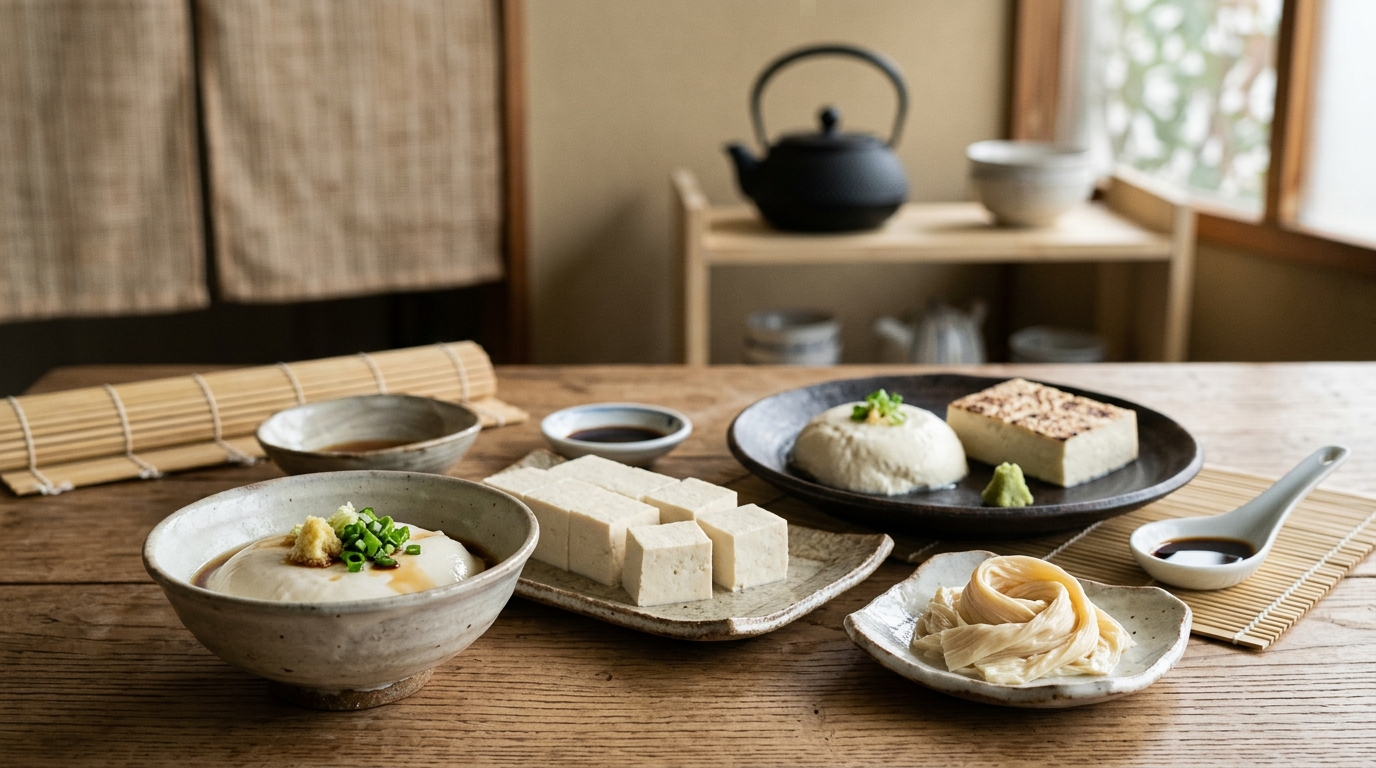
Two camps now share Japan’s tofu aisle. One is practical: reliable, budget-friendly blocks for everyday meals. The other chases novelty with experimental, ready-to-eat formats.
For firm texture and good value, standard Momen tofu is still the sensible pick. The newer formats are worth watching, though, especially if you’re curious about texture.
