Disclosure: This post contains affiliate links. If you buy through them we may earn a commission, at no extra cost to you.
Japanese gummies are not defined by chewiness alone. Some are elastic, some give way to a liquid center, and some stay firm long enough to make chewing the point. That difference matters when choosing: a gummy can have a flavor you like and still feel wrong if its texture does not match what you want.
Which Japanese gummy matches your texture preference?
Meiji Kaju Gummy
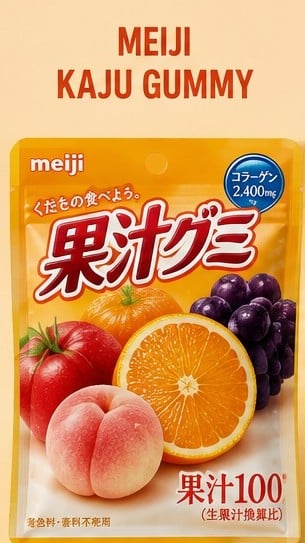
Meiji Kaju Gummy sits near the middle of the texture range, with balanced elasticity and a fruit-forward taste. A standard 54g pack typically costs between ¥145 and ¥165, while the 72g Elasticity Plus variants cost around ¥200. That makes the standard version an easy everyday option, with the larger line available when a firmer or more substantial chew is the priority.
The packaging is scheduled for renewal in March 2025, so updated designs may appear on shelves soon. For shoppers who want resistance without committing to a notably hard gummy, Kaju is the practical reference point for the rest of this list.
UHA Mikakuto Kororo
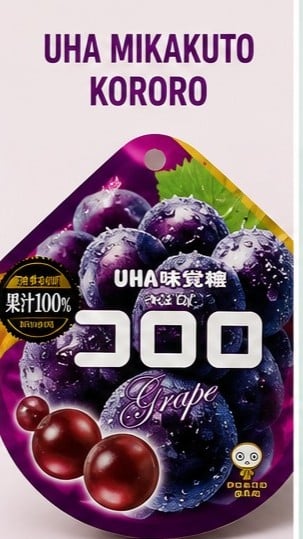
Kororo changes the usual gummy sequence. Its thin outer skin gives way to a liquid center, so the main appeal is the contrast between a brief snap and a juicy release rather than a long chew. A standard 48g bag costs approximately ¥160.
The lineup also includes more specialized formats. Boutique boxes cost around ¥648, with options such as Adberry and Blueberry, released in April and September 2024 respectively. Amaou Strawberry launched in December 2024. Choose Kororo when quick, intense juiciness matters more than keeping the candy firm in the mouth; that distinction becomes useful later when comparing it with Kabaya.
Kanro Pure Gummy
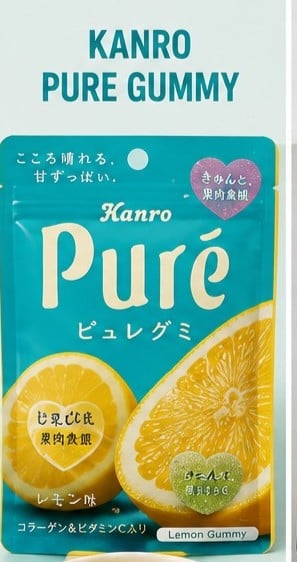
Kanro Pure Gummy puts the emphasis on a clean fruit taste made with real juice. Its texture is softer than Meiji’s but still holds together rather than becoming mushy. Standard variants cost approximately ¥160, while Premium variants cost around ¥194.
The small price gap between the two lines makes Premium worth considering first when a more refined fruit profile is the reason for buying. Standard Pure Gummy is the less committed choice for regular snacking; both fit readers who prefer flavor clarity over a demanding chew.
Kabaya Tough Gummy
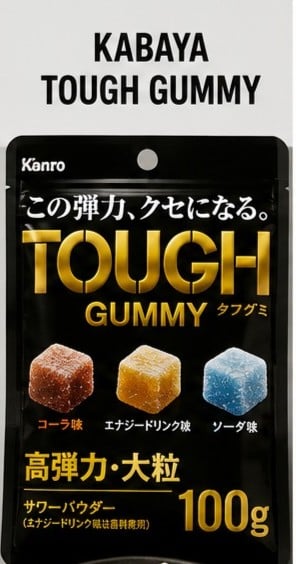
Kabaya Tough Gummy moves to the opposite end of the scale from Kororo. It offers a much firmer chew and is aimed at people who find typical Japanese gummies too soft or too fleeting.
That resistance lasts while snacking, giving the candy a clear functional advantage when the act of chewing is part of the appeal. The tradeoff is equally clear: it asks more of your jaw than Kororo or Pure Gummy, so it is better chosen for texture first and convenience second.
Bourbon Fettuccine Gummy
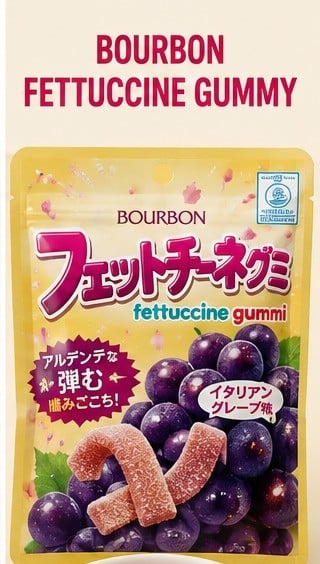
Bourbon Fettuccine Gummy changes the format as much as the texture. Its long, flat, noodle-like shape creates more surface area and gives the candy a different relationship with the tongue than cubes or bears.
The chew remains manageable, landing between soft and tough gummies. It is therefore less about choosing the strongest texture and more about choosing novelty: the shape makes the snack feel unlike the standard gummy format even before flavor enters the decision.
The main types explained
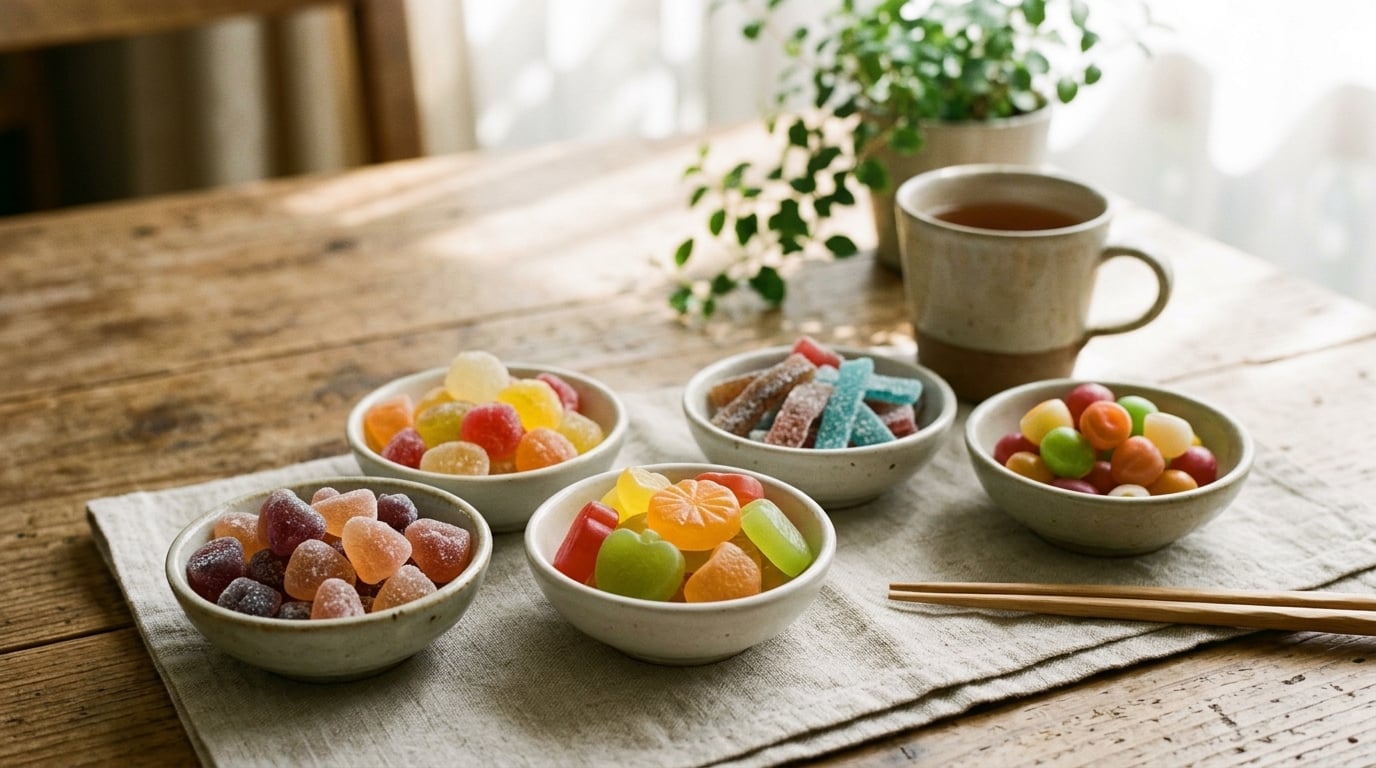
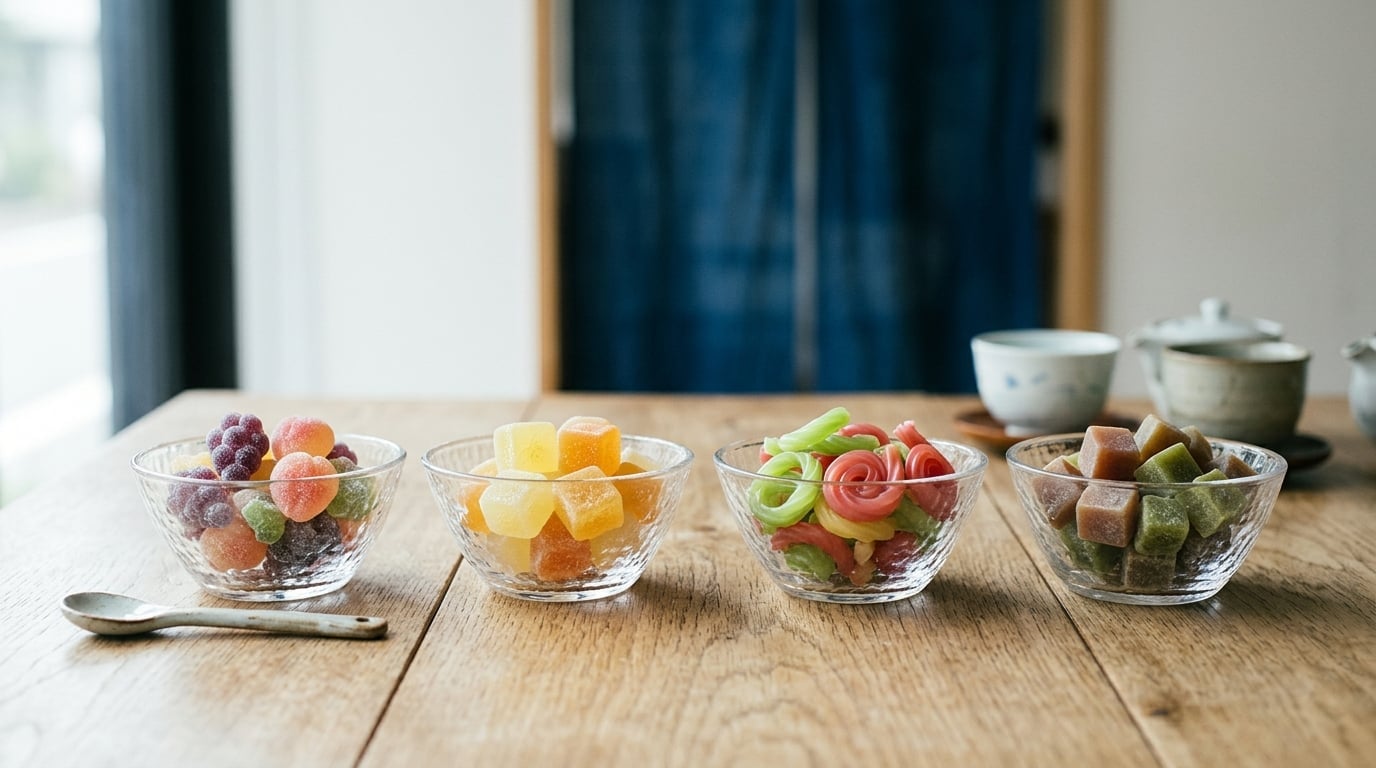
These five options fall into a few useful texture groups. Kororo is built around a burst and quick release; Meiji and Kanro occupy the softer, more familiar middle; Kabaya extends the chew; and Fettuccine changes the shape to change the eating pattern. Thinking in those terms is more useful than treating every fruit gummy as interchangeable.
Meiji Kaju Gummy: A balanced, elastic chew at a reasonable price. A 54g pack costs roughly ¥145 to ¥165, while the 72g Elasticity Plus variant costs around ¥200 and offers a firmer chew. Packaging is scheduled for renewal in March 2025.
UHA Mikakuto Kororo: The choice for a bursting texture: the outer skin snaps before the inside turns liquid. A standard 48g bag costs about ¥160. Boutique boxes cost approximately ¥648 and include varieties such as Amaou Strawberry, released in December 2024, Adberry in April 2024, and Blueberry in September 2024.
Kanro Pure Gummy: A softer, fruit-focused line with standard variants at approximately ¥160 and Premium variants at roughly ¥194. The difference is mainly useful to shoppers deciding how much emphasis to place on the higher-end version.
How to choose
Start with the chewing experience rather than the flavor name. If you want a gummy to disappear quickly, a firm option may feel tiring; if you want the candy to last, a soft or liquid-centered one may feel underwhelming. The five choices separate fairly cleanly once that preference is clear.
Choose Meiji Kaju Gummy for a familiar, balanced chew with some resistance but no extreme hardness.
Try UHA Mikakuto Kororo for its thin skin and semi-melt texture, especially if a quick burst matters more than extended chewing.
Pick Kanro Pure Gummy for a softer, fruit-forward texture that remains cohesive while eating.
Choose Kabaya Tough Gummy when a firm bite and long chew are the main attraction.
Go with Bourbon Fettuccine Gummy when an unusual flat shape matters as much as the chew itself.
That leaves the decision less mysterious than it first appears. Meiji is the middle ground, Kororo is the release, Kanro is the softer fruit option, Kabaya is the workout, and Fettuccine is the format change.
Best picks by use case
For a reliable daily snack, Meiji Kaju Gummy is the safest starting point. Its balanced texture does not push strongly toward either softness or toughness, which makes it easier to recommend when the buyer’s exact preference is unknown.
When texture matters most, Kabaya Tough Gummy is the more deliberate choice. Its firm resistance gives the snack a purpose beyond delivering flavor quickly.
For a more elevated fruit-focused option, Kanro Pure Gummy Premium is the one to consider first. The modest difference between the standard and Premium prices makes the higher-end line a reasonable trial when ingredient positioning and fruit character matter to the buyer.
Things to watch out for
Prices vary by retailer, and these figures reflect typical 2026 market rates rather than fixed manufacturer prices. Packaging can change as well, so a familiar product may not look exactly as expected. Those details are secondary to texture, but they matter when comparing a routine purchase with a specialty format.
Meiji Kaju Gummy packs usually cost ¥145 to ¥165 for the standard 54g size. The 72g Elasticity Plus variants are closer to ¥200.
Meiji Kaju Gummy’s standard packaging is scheduled for renewal in March 2025, so bags on store shelves may look different from older stock.
UHA Mikakuto Kororo standard 48g bags typically cost around ¥160. Premium boutique boxes cost approximately ¥648.
Kanro Pure Gummy standard variants generally cost about ¥160. The Premium line costs approximately ¥194.
FAQ
Which Japanese gummy has the most intense fruit flavor?
Meiji Kaju Gummy is the strongest fit if the goal is a direct, fruit-forward taste paired with a balanced chew. The name “Kaju” refers to fruit juice, and the product is positioned around that fruit profile rather than a purely sugary impression.
It is worth separating flavor intensity from texture here. Meiji does not provide the liquid-center effect of Kororo or the firm persistence of Kabaya; its appeal is the combination of clear fruit character and moderate elasticity.
What makes Kororo gummies different from regular chewy candy?
UHA Mikakuto Kororo is not uniformly chewy. Its thin outer skin gives way to a soft, liquid center, creating a brief textural contrast instead of the steady resistance associated with conventional gummies.
That structure also changes the timing of the flavor release. If you want a quick, juicy experience and little jaw work, Kororo makes more sense than the firmer choices; if you want the candy to last, the same feature may feel too brief.
Are there Japanese gummies designed for people who like a serious chew?
Kabaya Tough Gummy is designed for people who find standard gummies too soft or short-lived. Its firm texture requires more effort to break down and remains present while snacking.
The tradeoff is that it is not the quickest option. Its appeal depends on treating chewing as part of the snack, which is why it belongs at the opposite end of the list from Kororo.
Which option tastes like pasta or dessert rather than just fruit?
Bourbon Fettuccine Gummy takes a detour from the usual cube or bear. Its long, flat, noodle-like shape changes how the candy is handled and chewed, while its dessert-like direction makes it feel separate from a straightforward fruit gummy.
The novelty is the main reason to choose it. It does not compete directly with Kabaya for firmness or Kororo for juiciness; instead, it offers a different format for readers who want the shape itself to make the snack less routine.
Conclusion
For a balanced, elastic chew, Meiji Kaju Gummy is the clearest starting point. UHA Mikakuto Kororo is the pick for a thin skin and juicy center, Kanro Pure Gummy for softer fruit-focused eating, Kabaya Tough Gummy for sustained resistance, and Bourbon Fettuccine Gummy for an unusual shape. The best choice is ultimately the one that gives your jaw the amount of work you actually want.
