Disclosure: This post contains affiliate links. If you buy through them we may earn a commission, at no extra cost to you.
Finding a hair dryer that works quickly without damaging your hair is harder than it should be, especially with so many vague claims about “ions” and “nanotech.” You need a dryer that saves time without being rough on your hair. This list covers ten specific models, focusing on how they work rather than their marketing claims. Here’s which ones live up to their promises and who they suit.
Which of these Japanese hair dryers is actually worth your money?
Panasonic Nanocare EH-NA0K
The Panasonic Nanocare EH-NA0K sits at the premium end of Panasonic’s lineup, using the brand’s signature nanoe technology to target moisture retention while drying. It performs exceptionally well for those with thick or damaged hair who need high heat output balanced by intense hydration tech. The build quality feels substantial, suggesting durability, though its weight might tire out users with very long routines.
It suits someone who prioritizes hair health over pure speed and doesn’t mind paying for top-tier engineering.
Panasonic Nanocare EH-NA0J
Released in May 2024, the Panasonic Nanocare EH-NA0J offers a slightly more accessible entry point into the nanocare ecosystem, priced between ¥33,000 and ¥36,300. It retains the core ion and moisture benefits of its siblings but strips back some of the ultra-premium finishes to hit this mid-range bracket. This model is ideal for daily users who want reliable Panasonic performance without the flagship price tag.
It’s a solid workhorse that balances cost and capability effectively for most hair types.
ReFa BEAUTECH DRYER BX
The ReFa BEAUTECH DRYER BX, launched in November 2024 at ¥58,300, represents ReFa’s commitment to luxury styling tools. It focuses heavily on scalp care and shine, using precise airflow control to minimize heat damage while maximizing gloss. The design is sleek and ergonomic, making it comfortable for extended use, but the price places it firmly in the investment category.
This is for the buyer who views hair care as a beauty ritual and wants a tool that feels as good as it performs.
ReFa BEAUTECH DRYER S+
ReFa’s BEAUTECH DRYER S+ continues the brand’s trend of compact, high-performance dryers aimed at travelers and minimalists. While specific pricing isn’t listed here, it typically undercuts the BX model while maintaining the signature ReFa aesthetic and ion technology. It excels in portability without sacrificing too much power, making it a strong candidate for those who live out of suitcases or have limited bathroom counter space.
It suits users who value convenience and design equally.
ReFa BEAUTECH DRYER SMART W
The ReFa BEAUTECH DRYER SMART W integrates smart sensors to adjust heat and airflow based on real-time conditions, preventing overheating automatically. This model appeals to tech-savvy users who want a set-and-forget experience that protects hair from accidental heat stress. Its performance is consistent, offering a gentle yet effective dry that leaves hair feeling soft rather than stripped.
It’s best for those who struggle with manual temperature settings and want a safer, automated approach to drying.
Dyson Supersonic Nural Shine (HD16)
Dyson’s Supersonic Nural Shine (HD16), released in 2024 and priced between ¥48,000 and ¥55,000, brings intelligent heat control to the forefront. It uses sensors to measure air temperature 48 times per second, ensuring the heat never gets dangerously hot. The “Shine” variant likely includes attachments or coatings designed to improve gloss, catering to users focused on finish and frizz reduction.
It’s a premium choice for those who trust Dyson’s engineering and want a dryer that actively prevents heat damage through automation.
Dyson Supersonic r (HD17)
The Dyson Supersonic r (HD17) takes the original Supersonic concept and refines it with a redesigned head that reduces weight and improves balance. This iteration addresses common complaints about wrist fatigue during long drying sessions. It maintains the powerful digital motor that Dyson is known for, delivering fast drying times with controlled airflow.
This model suits users who have experienced strain with older dryers or simply prefer a more ergonomic, balanced tool in hand.
Sharp Plasmacluster Beauty IB-P801
Sharp’s Plasmacluster Beauty IB-P801 uses the brand’s proprietary Plasmacluster ion technology to purify the air around your hair while drying. This adds a layer of cleanliness and odor reduction that standard ion dryers don’t offer, making it unique in the lineup. It’s particularly useful for those concerned with environmental allergens or scalp hygiene.
The performance is steady, though it may lack the raw power of some competitors, favoring a gentler, cleaner dry instead.
Salonia Speedy Ion Dryer (SL-013)
The Salonia Speedy Ion Dryer (SL-013) is a no-nonsense tool focused on rapid drying through high-velocity airflow and negative ions. It lacks the complex sensor arrays of Dyson or ReFa, which keeps the price lower and the operation simple. This dryer is perfect for students, budget-conscious buyers, or anyone who just wants their hair dry quickly without fuss.
It’s a practical, durable option that gets the job done without unnecessary bells and whistles.
KINUJO KH202
KINUJO’s KH202 is a professional-grade dryer often found in salons, known for its solid motor and long lifespan. It prioritizes raw power and durability over consumer-friendly features like smart sensors or lightweight plastics. This model suits serious stylists or home users who want a tool that can withstand daily, heavy use for years.
It’s less about luxury and more about reliability and performance under pressure.
The main types explained
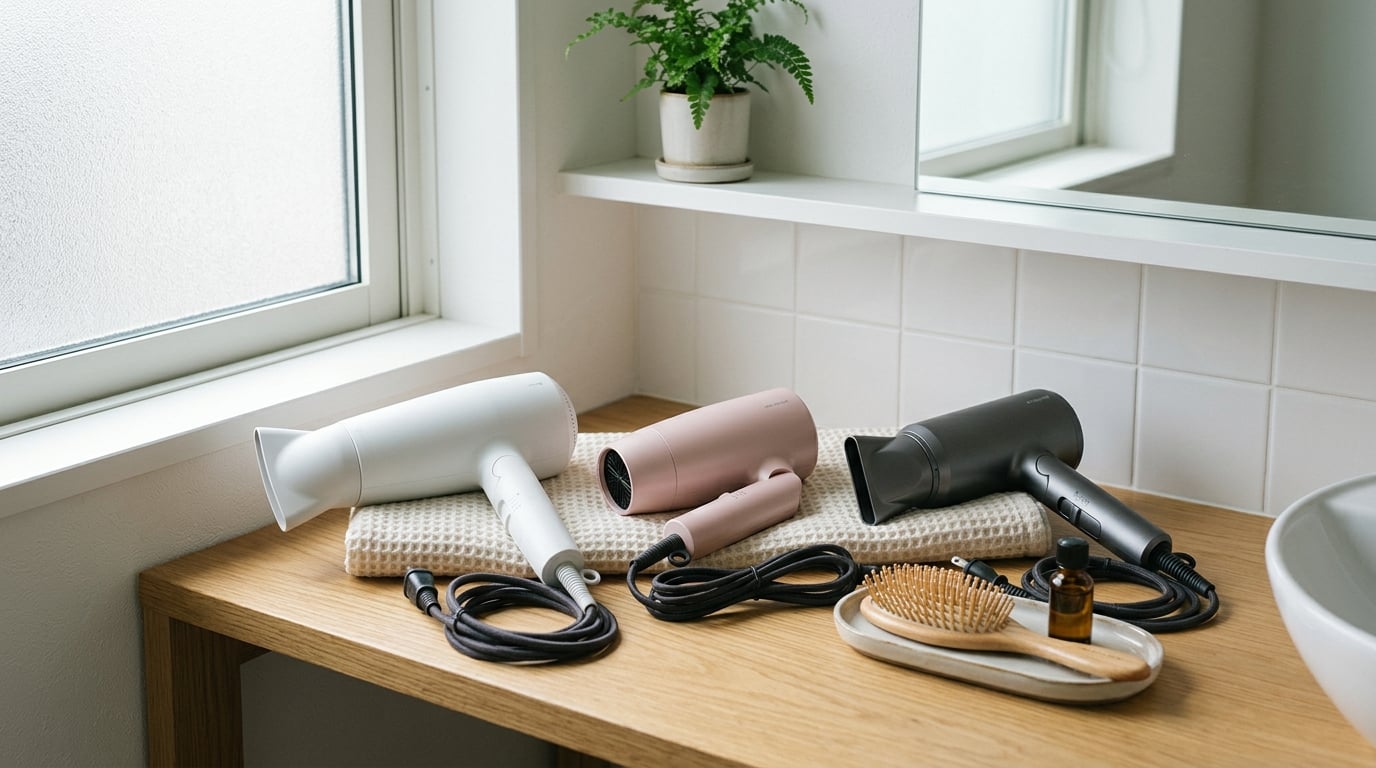
Japanese hair dryers tend to fall into two groups: high-end models with ion technology and compact units built for travel. Many run on 100V only, so they’re mainly suited to use in Japan unless you have a voltage converter.
-
Panasonic Nanocare (EH-NA0J): Released in May 2024, this model costs ¥33,000 to ¥36,300. It uses Panasonic’s high-concentration nanoe technology to help retain moisture, without requiring buyers to choose the latest 2026 release.
-
ReFa BEAUTECH DRYER BX: Released in November 2024 and priced at ¥58,300, this is the premium option for scalp care and high-pressure airflow. It’s a heavier, salon-grade dryer for buyers prepared to spend more.
-
ReFa BEAUTECH DRYER SE: Launched in October 2025 at ¥33,000, this is the smallest and lightest model in ReFa’s lineup. It suits travelers and anyone with limited bathroom storage who still wants ReFa’s ion technology.
-
Dyson Supersonic Nural / Shine: These 2024 models cost ¥48,000 to ¥55,000. They offer intelligent heat control and scalp protection modes, combining Dyson’s engineering with features aimed at the Japanese market.
-
Dyson Supersonic Travel (HD19): Released in April 2026 for approximately ¥45,000, this version is made for travel. Frequent flyers get a compact design while keeping the core Supersonic performance.
-
KINUJO KH30: Priced at ¥24,000 to ¥26,400 since its 2022 release, this model provides a more affordable entry into high-ion drying. It suits budget-conscious buyers looking for professional-grade ion output.
-
Sharp Plasmacluster (IB-WX901): Released in August 2023 and priced from ¥28, this model uses Plasmacluster ion technology for odor removal and moisture balance. It’s a mid-range option for buyers who prefer Sharp’s approach to hair care.
How to choose
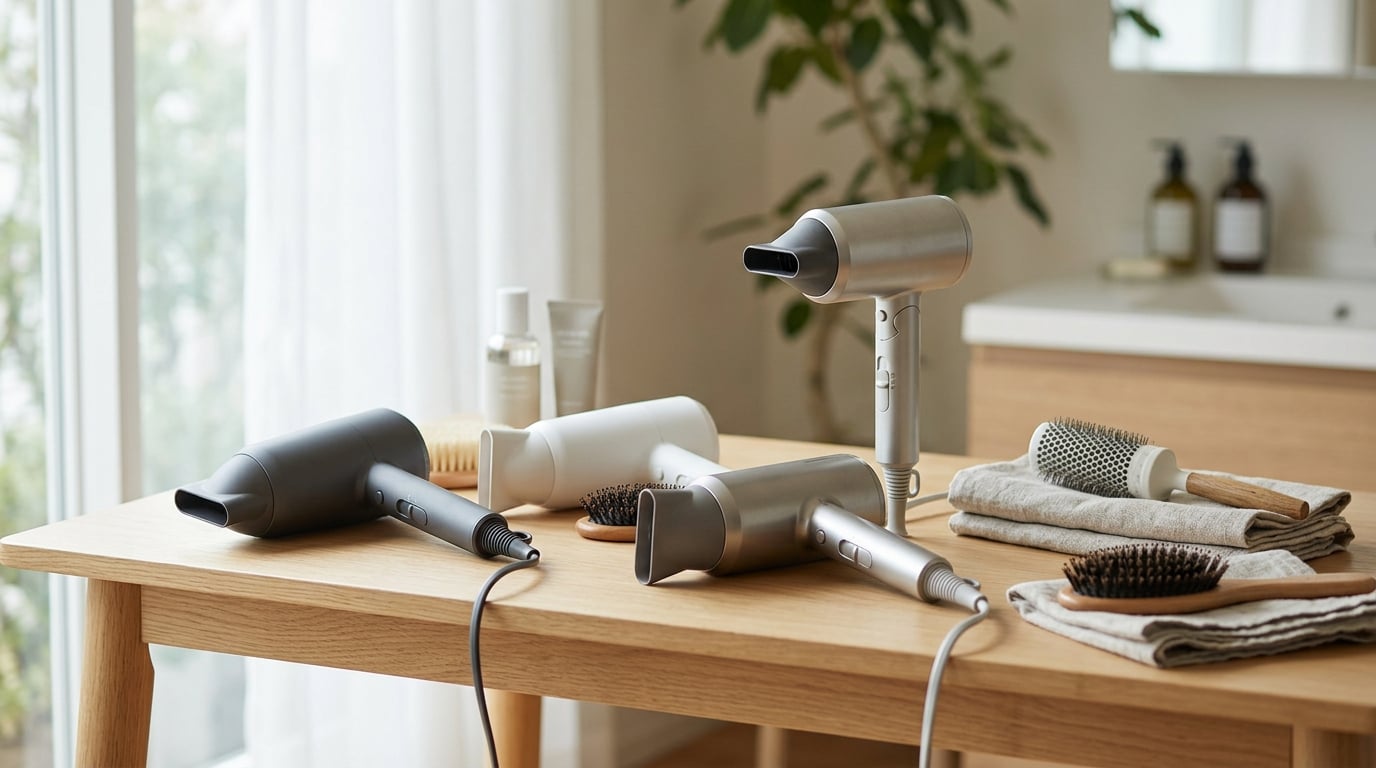
Choosing the right dryer comes down to your budget and the hair technology you want. Every model in this lineup is available on Amazon, so you can focus on which brand’s approach to heat and ions fits your routine.
-
Check the model suffix when buying a Panasonic unit. The EH-NA0K and EH-NA0J are different iterations and may have different features despite their similar names.
-
Consider the ReFa BEAUTECH line if you want a specialized beauty-tech approach. The BX, S+, and SMART W models offer different tiers within the line.
-
Look at Dyson’s HD16 Nural Shine or HD17 Supersonic r if you want premium engineering. These are the high-end options in the lineup.
-
Choose the Sharp Plasmacluster Beauty IB-P801 if you’re specifically interested in Plasmacluster ion technology rather than standard negative ions.
-
Opt for the Salonia Speedy Ion Dryer SL-013 or KINUJO KH202 if you want a straightforward tool focused on basic drying performance without complex attachments.
Paying for Nanocare or Plasmacluster makes sense if that hair-care technology matters to you. Otherwise, a simpler dryer from Salonia or KINUJO may meet your needs just as well.
Best picks by use case
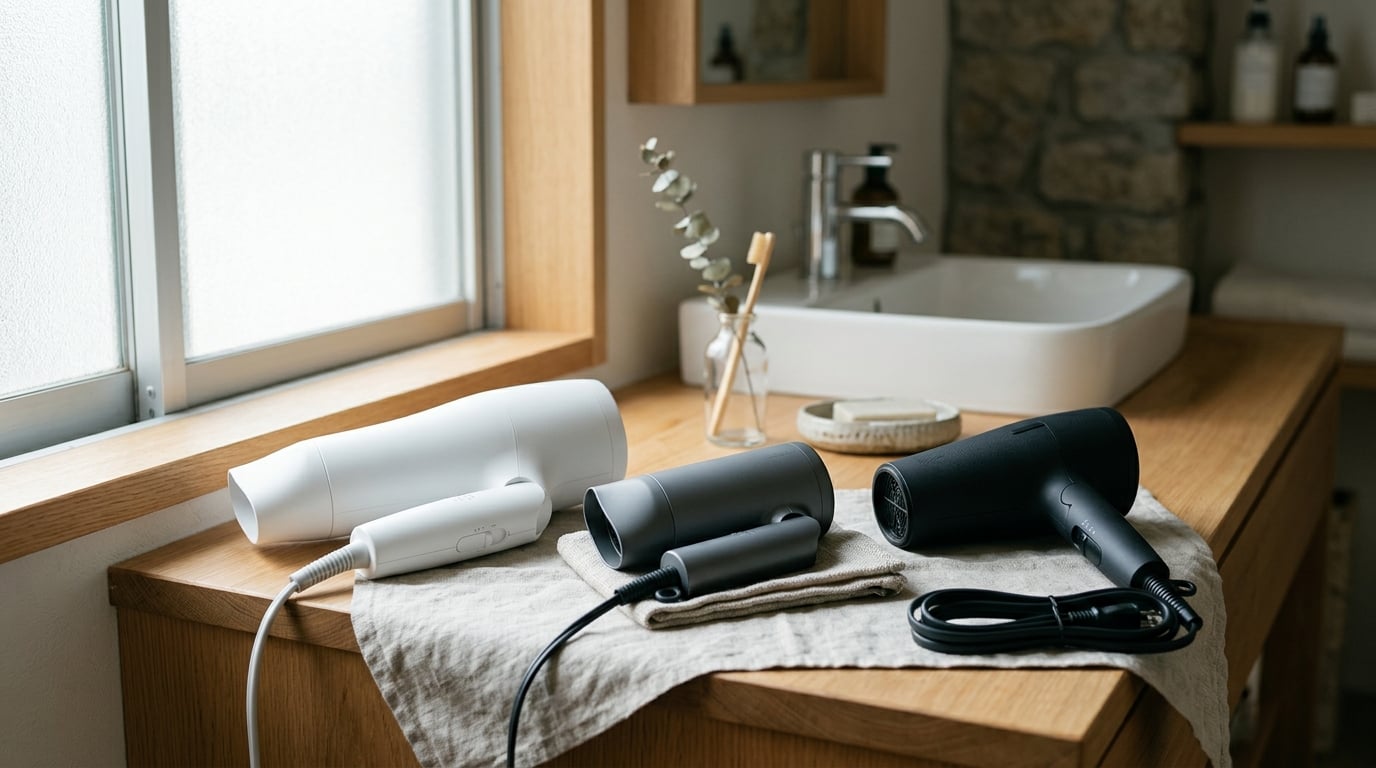
If you want a solid daily dryer without spending much, the Salonia Speedy Ion Dryer (SL-013) is a practical choice. It sits at the entry-level price point on Amazon and is easier to handle than heavy, outdated models. Its ion technology helps control frizz without the cost of luxury branding.
The Dyson Supersonic Nural Shine (HD16) costs more on Amazon, but its intelligent heat regulation makes the price easier to justify for frequent styling. It helps limit heat damage and offers more thermal control than cheaper models. For fine or chemically treated hair, its focus on shine may be worth the extra cost.
Travelers and minimalists may prefer the ReFa BEAUTECH DRYER S+. It combines high-end performance with a compact design that fits in a weekend bag. The dryer also uses the brand’s scalp-care airflow, making it a useful option for anyone who wants strong drying power without giving up much space at home.
Things to watch out for
Before you click buy, check the voltage label. Most high-end Japanese dryers, including the Panasonic Nanocare and ReFa Beautech lines, run on 100V only. Plugging one into a 220V outlet without a heavy-duty transformer can fry the motor instantly.
Even in a 110V home, the difference may cause overheating or shorten the lifespan of a dryer designed strictly for Japan’s grid.
-
The Panasonic Nanocare EH-NA0J and newer 2026 models such as the EH-NB70 are built for Japan’s 100V standard, so they require a voltage converter in most countries outside North America and parts of South America.
-
ReFa Beautech dryers such as the BX and S+ also operate on 100V. International travelers need a bulky step-down transformer to use them safely abroad, not a simple plug adapter.
-
Dyson models such as the Supersonic Nural Shine and Supersonic r often have region-specific power supplies. Check that the unit you buy matches your local voltage instead of assuming global compatibility.
-
Sharp Plasmacluster units such as the IB-P801 and older discontinued stock, including the IB-WX3, may lack dual-voltage support. Plugging them directly into higher-voltage outlets without proper conversion can create a fire hazard.
FAQ
What actually makes a Japanese hair dryer different from standard models?
The core difference usually comes down to how they treat moisture and heat. Many of the top contenders here, like the Panasonic Nanocare series, focus on infusing hair with moisture during the drying process rather than just blasting it with hot air. This approach aims to reduce the frizz and dryness that often result from high-temperature styling.
Other brands take a different route. ReFa models emphasize high-speed airflow and ion technology to cut drying time without excessive heat exposure, while Sharp integrates its Plasmacluster technology to address static and odor. It is less about raw power and more about the quality of the air hitting your strands.
Is the Dyson Supersonic considered a Japanese hair dryer?
No, Dyson is a British technology company, so models like the Supersonic Nural Shine (HD16) and the Supersonic r (HD17) are not Japanese products. They appear in this lineup because they are major competitors in the same premium market segment where Japanese brands like Panasonic and ReFa dominate.
If you are strictly looking for engineering and design originating from Japan, you should stick to the Panasonic, ReFa, Sharp, Salonia, or KINUJO options. The Dyson units offer their own distinct advantages in airflow control and heat regulation, but they do not share the specific ion or mineral technologies found in their Japanese counterparts.
Which model is best if I want to reduce drying time?
The ReFa BEAUTECH line, including the BX, S+, and SMART W models, is specifically engineered for speed. These dryers use high-pressure airflow to push water off the hair quickly, which means you spend less time holding a heavy device over your head. The “Speedy” name in the Salonia SL-013 also suggests a similar focus on efficient, fast drying through ion technology.
Panasonic’s Nanocare models (EH-NA0K and EH-NA0J) also dry efficiently but balance speed with moisture infusion. If your primary goal is purely getting out of the bathroom faster without worrying about extra hydration features, the ReFa or Salonia options are likely more aligned with that specific need.
Do these dryers help with frizz and static?
Yes, most of these units are designed to tackle both issues. The Sharp Plasmacluster Beauty IB-P801 uses Plasmacluster ions specifically to suppress static electricity and remove odors, which can be a big deal for fine or flyaway-prone hair. Similarly, the Salonia Speedy Ion Dryer relies on ion output to smooth the cuticle as it dries.
Panasonic’s Nanocare technology works by delivering mineral-rich moisture into the hair shaft, which naturally helps seal the cuticle and prevent frizz caused by dryness. While Dyson’s HD16 and HD17 models also manage frizz through intelligent heat control and airflow smoothing, they achieve it through mechanical precision rather than ion infusion.
Conclusion
If you want a reliable option for daily use, the Panasonic Nanocare EH-NA0K offers a strong balance of performance and price. Choose the ReFa BEAUTECH DRYER S+ for a lighter build, or the Salonia Speedy Ion Dryer when keeping costs down matters most.
