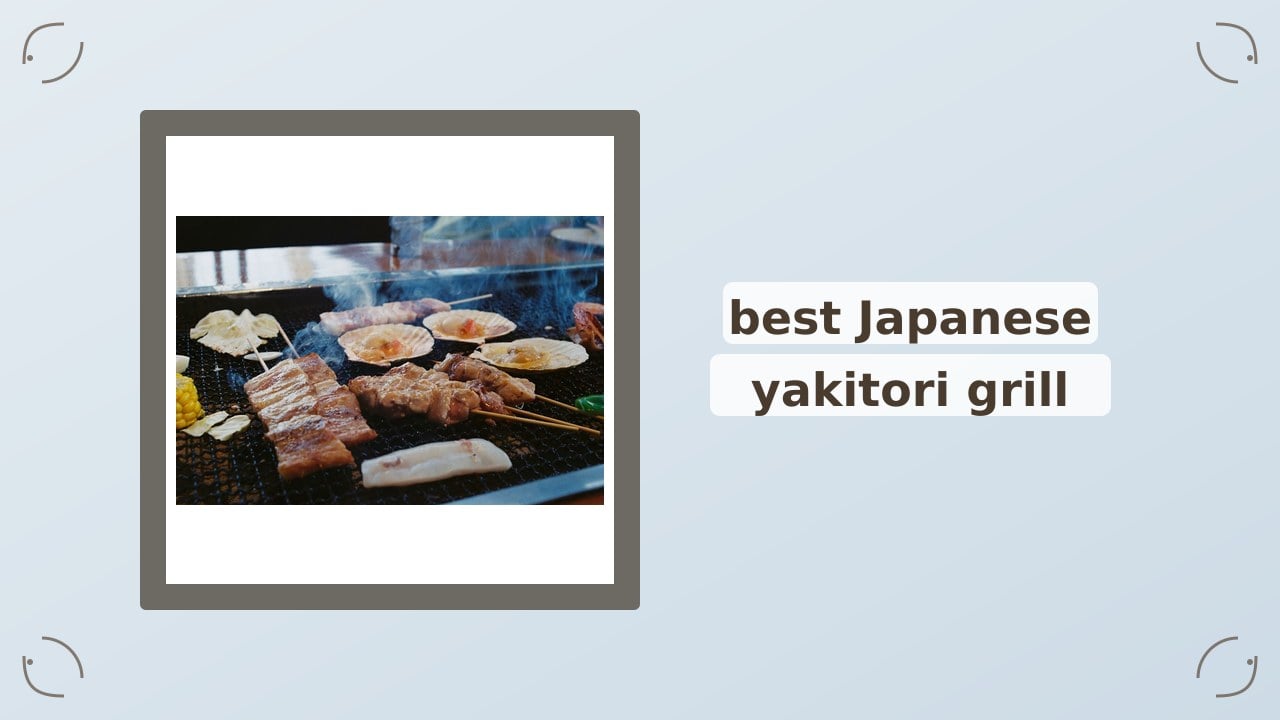
You want the smoky, salty char of a Tokyo izakaya, but your balcony or kitchen counter may have strict limits. Many “Japanese” grills sold online are small hibachis that don’t hold heat well enough for skewers. I’ve narrowed the options to eight models that work for yakitori, from portable gas units to serious charcoal konros.
Here’s what each one does, where it falls short, and who it suits.
Which of these yakitori grills is actually worth your money?
Iwatani Aburiya II CB-ABR-2
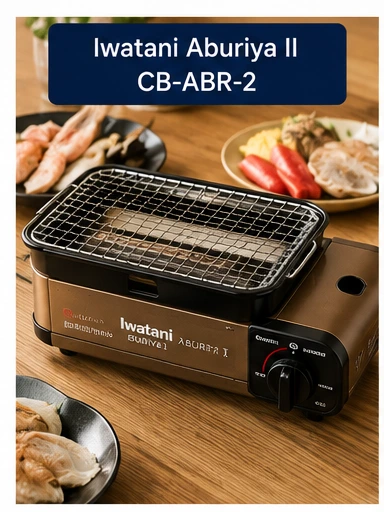
The Iwatani Aburiya II CB-ABR-2 is a cassette gas grill available on Amazon that solves the biggest headache of indoor yakitori: ventilation. Unlike charcoal, this unit burns clean enough to use inside without setting off every smoke alarm in your building, provided you crack a window. It uses standard butane canisters, which makes it incredibly portable for camping or moving from the kitchen to the patio.
The flame control is precise, allowing you to sear chicken skin quickly without burning the meat underneath. However, you will never get the deep, woody aroma of binchotan charcoal with this setup. It suits apartment dwellers who prioritize convenience and speed over traditional smokiness.
Kinka Diatomite Charcoal Konro B-4
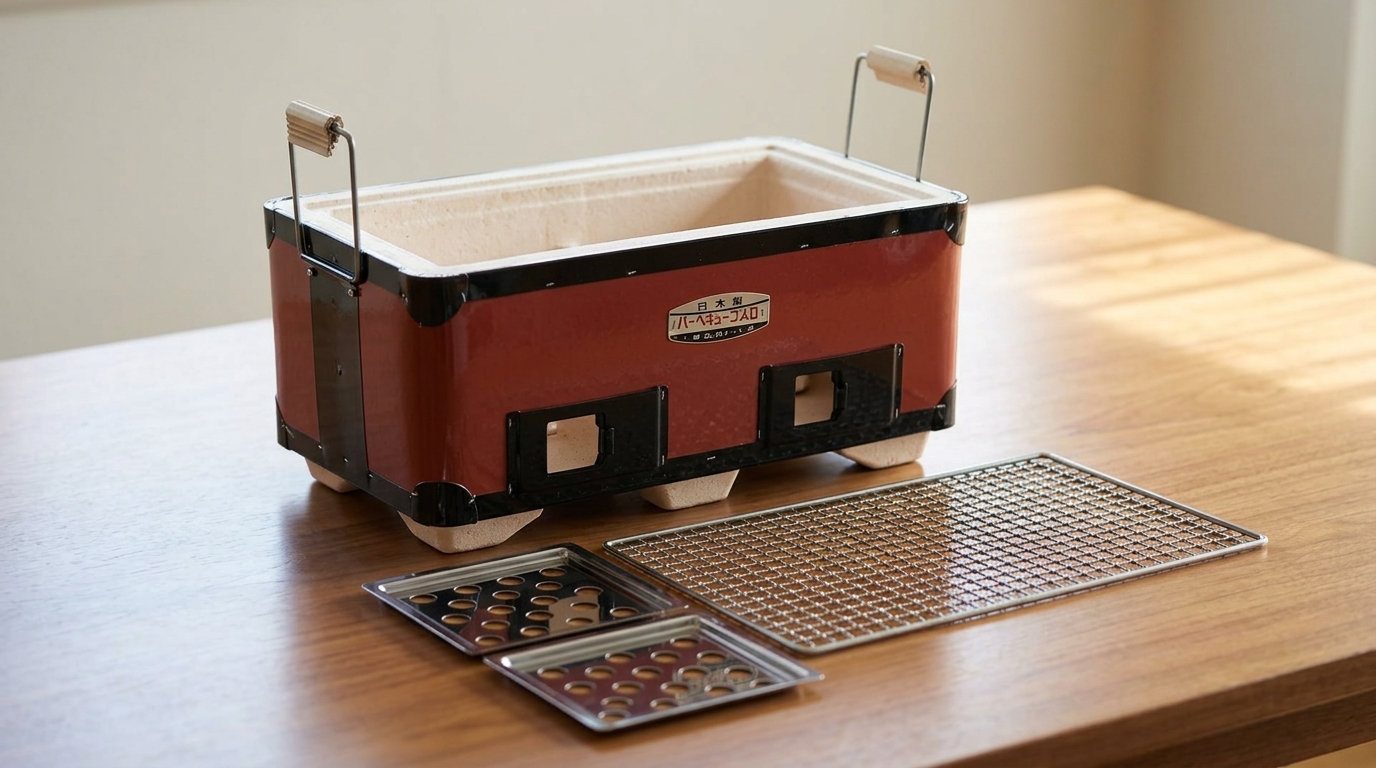
Kinka Diatomite Charcoal Konro B-4 is a compact charcoal grill listed on Amazon, designed for tight spaces. The diatomite construction is key here; it absorbs moisture and retains heat far better than cheap ceramic alternatives, giving you a more stable cooking temperature. This small footprint makes it ideal for single servings or couples who want to grill a few skewers at a time.
It heats up relatively quickly compared to larger clay bodies. The downside is its limited capacity; you cannot cook for a crowd. If you live alone or just want a quick late-night snack, this size hits the sweet spot between performance and storage ease.
Kinka Diatomite Charcoal Konro B-16
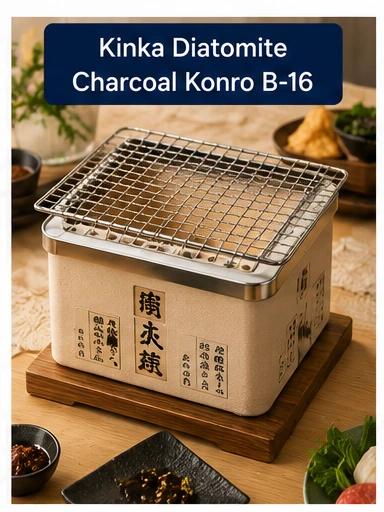
The Kinka Diatomite Charcoal Konro B-16, also found on Amazon, is the bigger sibling to the B-4 and offers significantly more grilling surface. This extra width allows you to lay out multiple skewers side-by-side without them touching, which is important for even cooking. Like its smaller counterpart, it uses diatomite to maintain consistent high heat, essential for proper yakitori technique.
It is still small enough to fit on a standard dining table, making it a social centerpiece. However, it requires more charcoal to fill properly, and the heating time increases slightly. This model suits small families or groups of friends who want the authentic charcoal experience without needing a backyard pit.
The Bincho Grill 24″ Wide Body
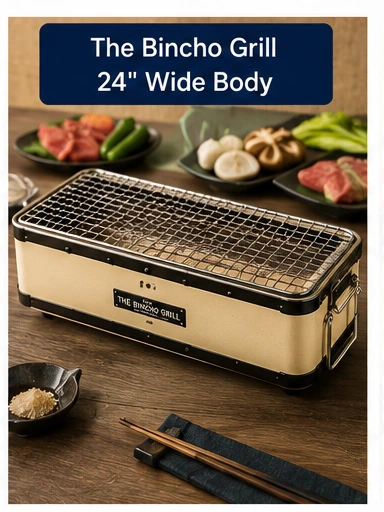
The Bincho Grill 24″ Wide Body on Amazon is a serious piece of equipment for those who want professional-grade results. The 24-inch width provides ample space for cooking large batches of skewers simultaneously, mimicking the workflow of a restaurant counter. Bincho-style grills are known for their durability and ability to reach extremely high temperatures, which seals in juices while charring the exterior.
This unit is heavy and substantial, so it is not something you will move around daily. It demands respect and proper charcoal management. If you host regular dinner parties or are serious about mastering yakitori, this wide body offers the capacity and heat retention you need.
The Bincho Grill 16″ Mini
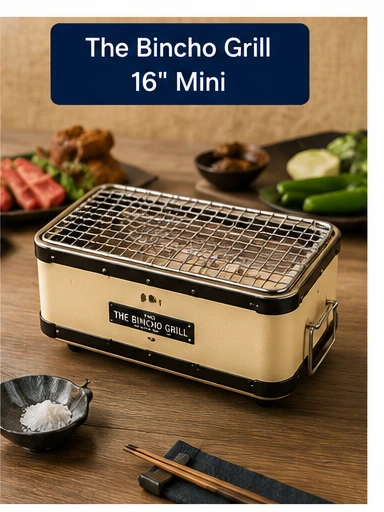
The Bincho Grill 16″ Mini on Amazon brings the premium binchotan experience to a tabletop format. At 16 inches, it strikes a balance between the cramped feel of tiny konros and the bulk of full-sized units. It fits comfortably on most tables and delivers the intense, radiant heat characteristic of bincho charcoal.
The build quality feels solid, suggesting it will last for years if cared for properly. While it holds fewer skewers than the 24-inch version, it heats up faster and uses less fuel. This is the best choice for couples or small households who want high-end performance without the massive footprint of the wider model.
Zojirushi Indoor Electric Grill EB-CC15
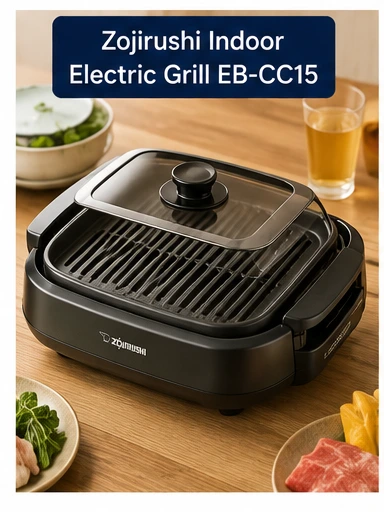
Zojirushi Indoor Electric Grill EB-CC15, available on Amazon, removes the fire hazard entirely by using electric heating elements. This makes it the safest option for strictly indoor use, especially in buildings with strict no-charcoal policies. Zojirushi is known for reliable build quality, and this unit likely features easy-to-clean surfaces and consistent temperature control.
You lose the charcoal flavor completely, so you must rely on your tare sauce and technique for taste. It is perfect for beginners who are intimidated by managing hot coals or for offices where you want to grill lunch without smoke issues. Expect a cleaner, albeit less complex, flavor profile.
Zojirushi Indoor Electric Grill EB-DLC10
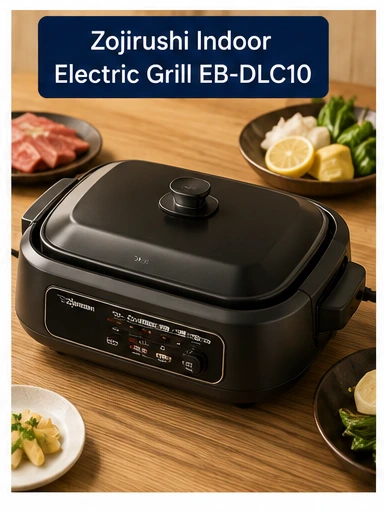
The Zojirushi Indoor Electric Grill EB-DLC10 on Amazon is another electric option from the same trusted brand, likely offering a different form factor or capacity than the EB-CC15. Electric grills like this provide a hassle-free experience with minimal cleanup compared to ash-heavy charcoal setups. It allows for year-round yakitori regardless of weather or ventilation constraints.
The trade-off remains the lack of smoky depth, which some purists will find unacceptable. However, for consistent, repeatable results with zero fuss, this electric model delivers. It suits users who value convenience and cleanliness above all else.
Yatai Yokocho MYT-800
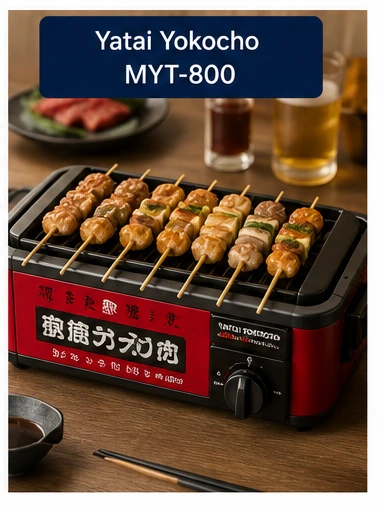
Yatai Yokocho MYT-800 is listed on Amazon, but without specific details on its fuel type or dimensions, it is hard to pin down its exact niche. Generally, products under names like “Yatai” (street stall) aim to replicate the casual, open-air vibe of Japanese street food. If this is a gas or electric unit, it likely focuses on portability and ease of setup.
If it is charcoal, it may be a simplified konro design. Without more specs, treat it as a general-purpose option that may suit casual users looking for an affordable entry point into yakitori grilling. Check the specific listing for fuel type before buying to ensure it matches your ventilation capabilities.
How to choose
Choosing a yakitori setup comes down to two things: charcoal flavor or the convenience of indoor electric cooking. Your counter space and ventilation will determine which of these Amazon-listed models fits your home.
Check your kitchen’s ventilation before buying a charcoal model. Grills such as the Kinka Diatomite Charcoal Konro series need proper airflow to manage smoke and heat safely.
Measure your countertop carefully. Sizes vary from the compact Zojirushi EB-DLC10 to The Bincho Grill Wide Body, which is 24 inches wide.
Think about portability if you plan to cook small batches. The Iwatani Aburiya II and Kinka B-4 have much smaller cooking surfaces than the larger Yatai Yokocho MYT-800.
Choose your fuel early. Electric models such as the Zojirushi EB-CC15 eliminate charcoal handling, though they may not produce the same smoky depth as diatomite konros.
Consider how many skewers you’ll cook at once. The narrow Kinka B-16 suits a couple of people, while wider grills can handle larger groups.
Factor in cleanup. Electric grills often have non-stick surfaces that wipe down easily, while charcoal units require ash disposal.
Where you plan to use the grill should guide the decision. Electric models work well indoors, while charcoal grills need outdoor or well-ventilated spaces. Choose the power source that fits your living situation, then choose the size.
FAQ
Can I use these grills indoors without setting off smoke alarms?
It depends entirely on the heat source. The Zojirushi Indoor Electric Grills (models EB-CC15 and EB-DLC10) are explicitly designed for indoor use, making them the safest bet for apartment dwellers or those without ventilation hoods. They run on electricity, so you avoid the smoke and carbon monoxide risks associated with burning charcoal.
The other options, including the Iwatani Aburiya II, Kinka Konros, Bincho Grills, and Yatai Yokocho, rely on charcoal or gas. These produce significant smoke and require excellent outdoor ventilation or a dedicated exhaust system. Trying to use a charcoal konro inside a standard kitchen is a quick way to ruin your ceiling paint and irritate your lungs.
Which model is best for small apartments or limited counter space?
If you are tight on space, look at the Zojirushi EB-DLC10 or the Kinka Diatomite Charcoal Konro B-4. The Zojirushi is an electric unit that keeps the mess contained and fits easily on a countertop. The Kinka B-4 is a compact charcoal option that doesn’t demand a large footprint, though you still need to manage the ash and heat safely.
The Bincho Grill 16″ Mini is another space-conscious choice if you prefer the traditional binchotan aesthetic but lack room for the full-sized 24″ Wide Body. Just remember that even “mini” charcoal grills need clearance from walls and flammable materials, so measure your setup area before buying.
Do I need special charcoal for the Kinka or Bincho grills?
While you can technically burn various fuels, these grills are optimized for specific types. The Kinka Diatomite Charcoal Konros (B-4 and B-16) feature diatomite construction, which is designed to work efficiently with charcoal to retain heat and reduce fuel consumption. Using high-quality binchotan (white charcoal) in the Bincho Grills will give you that signature steady, high heat without excessive ash.
The Iwatani Aburiya II uses cassette gas canisters instead of charcoal, so you won’t need to worry about coal quality or lighting times. It’s a trade-off: you lose some of the smoky flavor profile but gain immediate ignition and consistent temperature control without fanning embers.
What is the difference between the Yatai Yokocho MYT-800 and the other gas models?
The Yatai Yokocho MYT-800 is listed as a distinct option alongside the Iwatani Aburiya II, suggesting it serves a similar niche of portable gas-powered grilling. However, specific functional differences between these two gas models aren’t detailed here beyond their model names. Both likely offer the convenience of no-charcoal cooking, but their build quality, grate design, or heat distribution may vary.
If you are deciding between gas units like the Yatai Yokocho or Iwatani Aburiya II versus charcoal options like the Kinka or Bincho grills, focus on your priority: speed and convenience versus flavor depth. Gas models are ready in seconds; charcoal requires prep but delivers that authentic yakitori taste many enthusiasts chase.
Conclusion
If you want an authentic smoky char, the Kinka Diatomite Charcoal Konro B-4 delivers it at a reasonable price, but it needs proper ventilation. In an apartment, the Zojirushi Indoor Electric Grill EB-CC15 is a more practical choice because it produces much less smoke. Choose the grill that suits your space, then enjoy some skewers.
