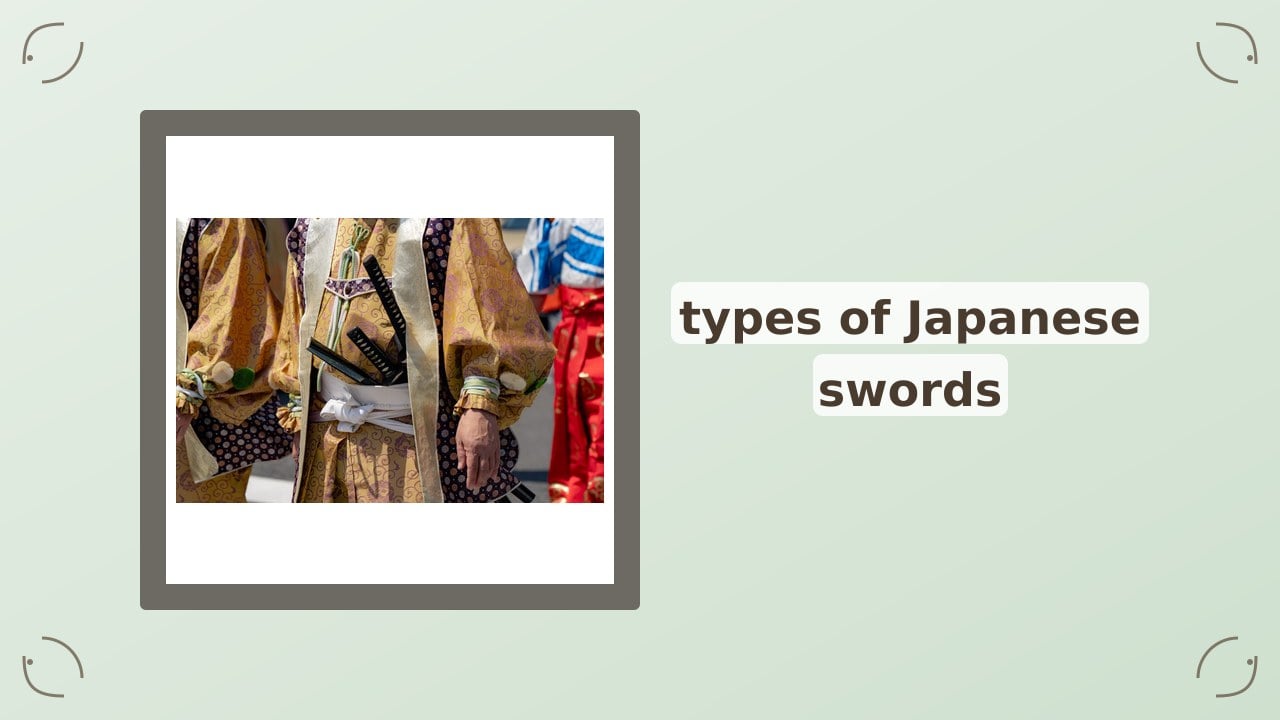
When it comes to Japanese swords, blade shape is only the starting point. The 60-centimeter mark matters more, as does the sword’s mounting, and together those details largely determine a Japanese sword’s identity and price tier in 2026. A cavalry-mounted tachi is not the same tool as an infantry-ready katana, either.
Misreading that distinction can lead to legal or tactical mistakes.
The stakes vary sharply.
Shape alone won’t tell you enough about a Japanese sword. Start with its mounting and intended use. A tachi hangs edge-down and was made for cavalry use; a wakizashi, by contrast, suits close quarters.
What defines the different types of Japanese swords?
Blade length does more than shape a sword’s appearance. It helps determine the weapon’s legal and tactical identity, with 60 centimeters serving as the critical boundary: a blade shorter than that is a wakizashi, while longer blades fall into katana or tachi territory depending on how they’re worn.
How does blade length distinguish a katana from a tachi or wakizashi?
That measurement marks the basic dividing line. Shorter blades are classified as wakizashi or tanto and were useful in close quarters or indoors. A longer blade may be a katana or tachi, but length alone doesn’t settle the matter.
The mounting does.
A tachi hangs edge-down from the belt, a configuration associated with cavalry use. The katana is worn edge-up through the sash, allowing a quick draw for infantry combat.
What is the functional difference between shinken and iaito?
One cuts. The other doesn’t.
Shinken have sharpened steel blades, while iaito are made from a zinc-aluminum alloy with a completely dull edge. That makes iaito suitable for drawing practice, or iaido, with less risk of severe injury. They still reproduce the weight and balance of a real sword, so practitioners can train their forms without using a live blade.
Why are antique nihonto and modern shinsakuto classified separately?
The dividing point is 1953. Nihonto are swords made before that year with traditional tamahagane steel and folding techniques. Shinsakuto are newly forged by licensed smiths today, using similar methods but lacking the older swords’ historical provenance.
The label matters. It can affect export laws and value, and antique nihonto often carry historical papers such as Hozon certificates. Shinsakuto, by contrast, are examples of contemporary craftsmanship rather than documented pieces of the past.
https://twitter.com/valohabercisi/status/1998525430048109015
How do construction methods and materials determine sword performance?
Folding tamahagane is hard work, not empty ritual. Raw bloom steel starts with carbon distributed unevenly, so the smith folds and welds it repeatedly to even out hardness, reduce brittle spots, and remove impurities that might cause failure under stress. The process also leaves the steel with its distinctive grain pattern.
Just as importantly, it strengthens the blade.
Why does traditional tamahagane steel require complex folding techniques?
Without that folding, a blade might snap on impact rather than bend or hold its edge. The repeated welding brings the layers together and makes the steel more consistent, correcting the uneven carbon content found in the raw bloom.
How does an unsharpened alloy blade mimic the weight of a real sword?
An iaito uses a zinc-aluminum alloy to approximate the density of high-carbon steel. It has no sharp edge, but its mass distribution can still resemble that of a shinken. That gives practitioners a way to build proper muscle memory without risking accidental cuts.
What role does the koshirae mounting play in balance and usability?
Handling begins with the mounting. The scabbard, hilt, and guard all influence balance, while a heavy tsuba shifts the center of gravity toward the hand and can make quick draws easier to control. A lighter mounting, by contrast, favors cutting momentum.
The difference is immediate: one sword may feel sluggish, another responsive during practice.
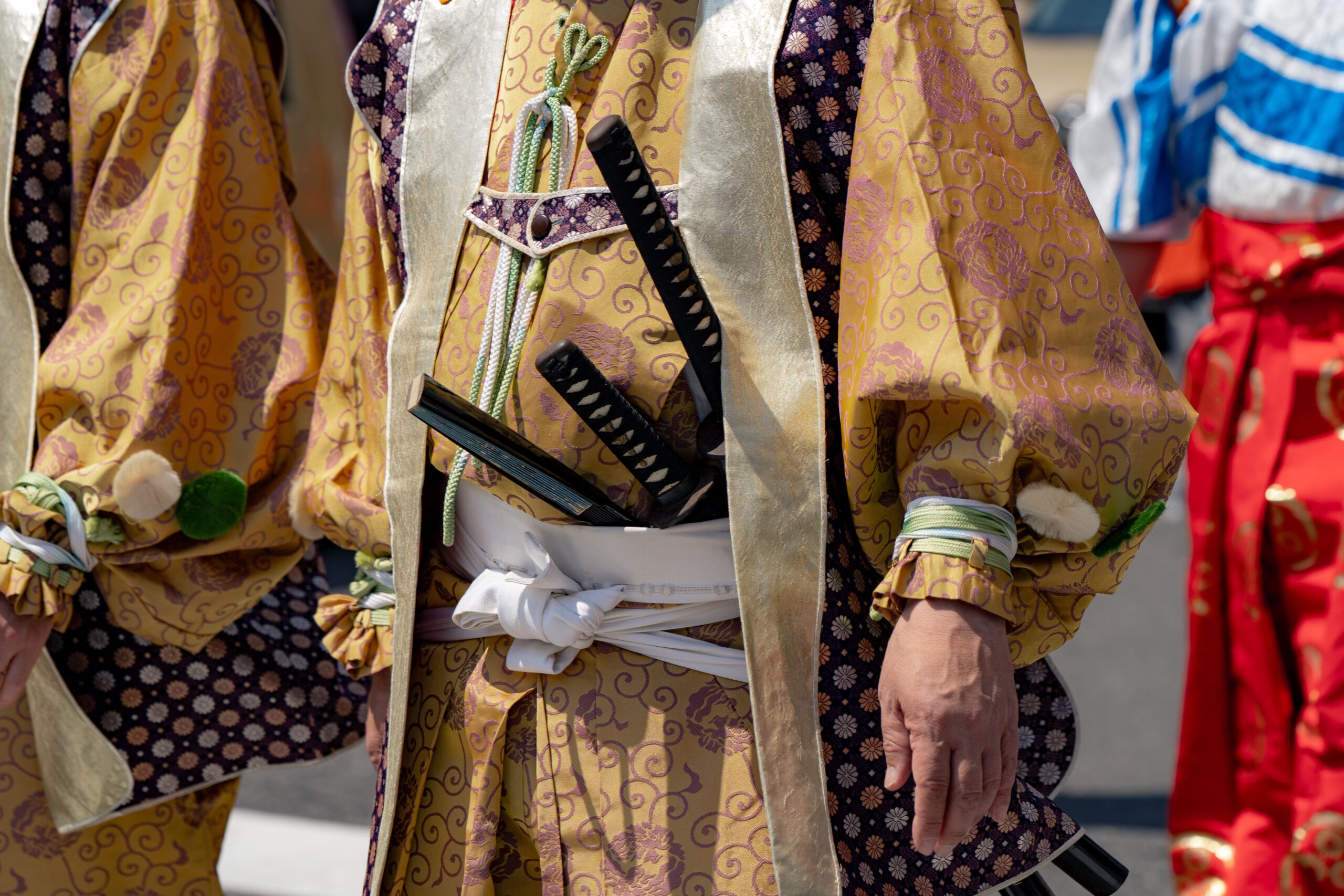
Photo by Iban Lopez Luna on Pexels
What does the current purchasing landscape look like for collectors and practitioners?
In 2026, the divide is hard to miss: functional tools sit in one market, historical artifacts in another, and their prices follow separate logic.
How have US import tariffs affected the cost of production-grade swords?
The cheapest dependable blades are disappearing. Chinese steel import tariffs have pushed entry-level functional katana prices up by roughly 15 percent, and HanBon Forge now lists most models at $200 to $1,500. The brand has absorbed part of the increase, but buyers are bearing the rest.
In the US market, reliable blades under $200 are now rare.
Why are lead times for custom iaito and shinsakuto extending into years?
Material isn’t the main constraint. There simply aren’t enough licensed smiths for the demand, so custom work moves slowly. A standard Tozando Suzaku iaito costs $800 to $1,300 and often requires a six-month wait, while authentic shinsakuto start at $7,500 and can sit on waitlists for more than two years.
Which reputable dealers currently hold verified stock of authentic antiques?
Immediate purchase is possible at Aoi Art, which has approximately 640 verified nihonto in stock. Entry-level antiques run $2,000 to $3,500; Hozon-certified blades command $10,000 to $50,000. When a buyer has the budget ready, those pieces can sell quickly.

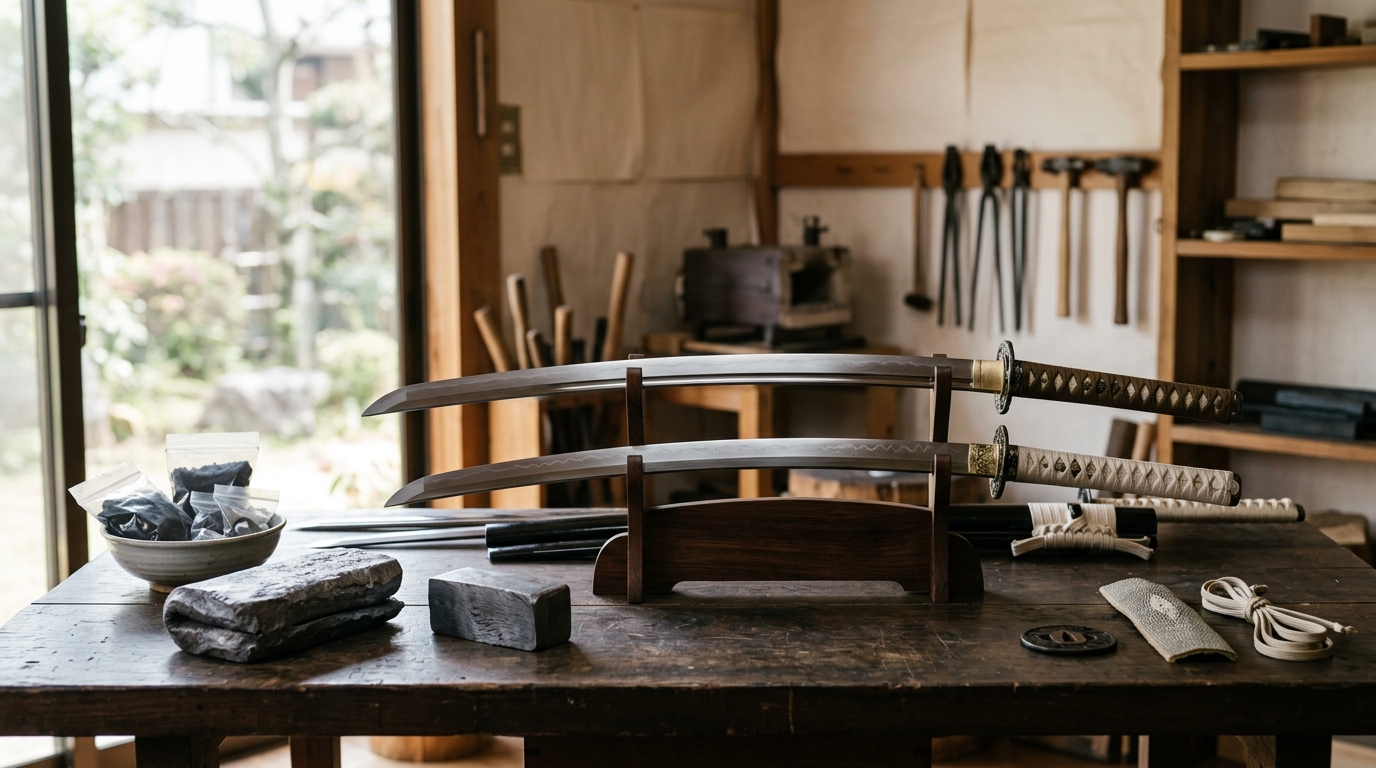
Photo by Vika Glitter on Pexels
What pitfalls should buyers avoid when selecting a Japanese sword?
Searches for “Muramasa Official” and “Hanzo Steel” turn up no legitimate swordsmiths. Instead, they lead to mass-produced decor dressed in anime aesthetics, with fictional names built by drop-shippers to borrow pop-culture recognition rather than document any historical lineage. In plain terms, buyers are paying for a logo, not a blade.
Why do ‘Muramasa Official’ and ‘Hanzo Steel’ brands not actually exist?
Muramasa was a real and controversial smith from the Muromachi period. He did not establish a modern corporate brand. “Hanzo” points to the ninja Hattori Hanzō, who did not forge swords himself, so websites claiming to sell official merchandise from either figure are offering fantasy props.
Some of those props use stainless steel, a material that can shatter on impact.
How can buyers identify inflated prices for unverified antique certificates?
The price gap should make buyers pause. Aoi Art lists verified antiques starting around $2,000, yet some vendors ask $5,000 for pieces backed only by “private” appraisals. Legitimate Nihonto require NBTHK or NTHK papers.
A certificate without that foundation is decorative paper, no matter how formal it looks. If the seller cannot trace the blade’s provenance to a recognized Japanese authority, walk away. The accompanying story doesn’t change that.
What risks accompany the purchase of discontinued wooden training weapons?
Old wood can hide trouble. Discontinued bokken may develop dry rot or concealed micro-fractures, and a snapped suburi stick can cause serious injury. New Minosaka Jidai Koshirae iaito cost $450 to $600 and include warranty support, while used wooden weapons do not.
For that reason, fresh stock from Tozando or Seido Shop is the safer choice, even when a search for rare, aged wood seems more appealing.
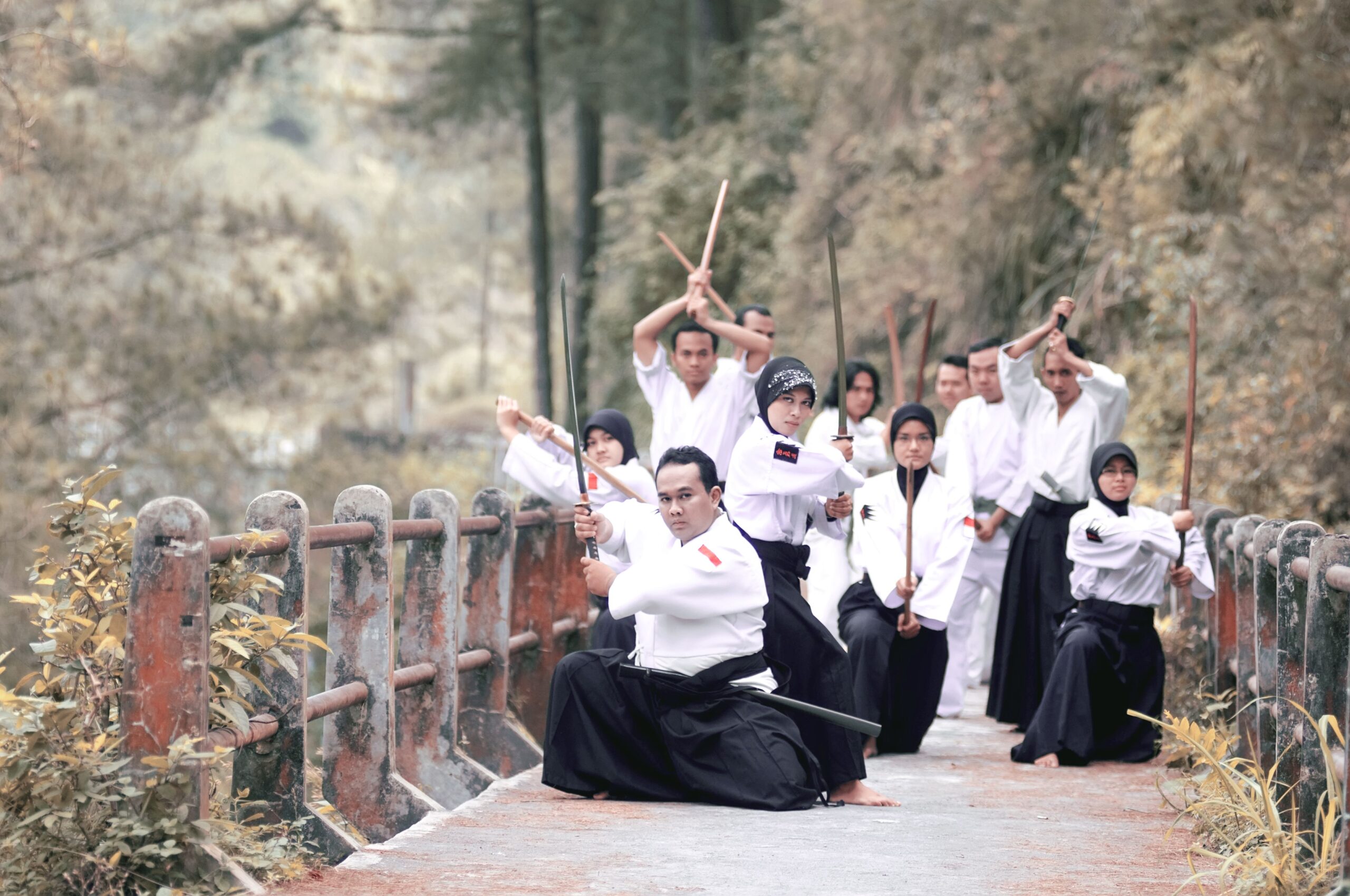
Photo by Fotografer Wedding Jogja on Pexels
What are the most common questions about owning and maintaining these blades?
Importing a blade isn’t just a matter of paying for delivery. Customs rules can catch even experienced collectors, which makes confirming the exact item before it crosses the border essential.
Is it legal to import authentic nihonto into the United States in 2026?
Yes, although the conditions are narrow. The blade must be more than 100 years old or classified as art, because federal law strictly restricts modern functional steel swords. Authentic antiques also require documentation that proves both their age and cultural status.
Paperwork can be handled by dealers such as Aoi Art. Private imports are more likely to get held in customs, however, and the seller’s word isn’t enough. Check the export license yourself, then confirm that it matches the US import codes.
How often does a functional shinken require oiling and inspection?
Humidity changes the schedule. In a humid climate, inspect a high-carbon steel blade every two weeks to catch rust early. A dry environment may allow monthly checks, but leaving the blade unattended still carries a rust risk.
Use specialized choji oil, and remove the old residue before applying a thin, even coat. More oil isn’t safer. Thick layers can trap moisture and damage the polish over time.
Can a beginner safely practice with a high-end custom iaito?
Usually, that’s a poor place to start. High-end models such as the Tozando Suzaku are balanced for advanced practitioners, and their weight distribution demands precise control that beginners may not have developed.
An entry-level Minosaka Tokusei is the more forgiving choice. Its balance and durability help while you learn basic draws, and dropping it is less likely to lead to costly repairs.
At a glance
|
Sword Category |
Key Characteristics & Market Reality (2026) |
|---|---|
|
Nihonto (Antique) |
Forged before 1953 using traditional tamahagane steel; defined by historical provenance and often accompanied by Hozon certificates. Entry-level unverified pieces start around $2,000–$3,500, while standard certified examples range from $10,000 to $50,000. Masterpieces with Juyo status can exceed $420,000. Approximately 10,000 authentic swords are exported from Japan annually, with prices rising 10–15% in the last year due to high overseas demand. |
|
Shinsakuto (Newly Forged) |
Freshly crafted by licensed modern smiths using traditional folding methods but lacking historical age. These represent contemporary craftsmanship rather than antique value. Custom orders typically start between $7,500 and $15,000+, with lead times often stretching 1–2 years. Unlike antiques, their value is tied to the living smith’s reputation and current material costs. |
|
Iaito (Practice Alloy) |
Made from zinc-aluminum alloy with a completely dull edge, designed specifically for safe iaido drawing practice. They replicate the weight and balance of a shinken without the cutting risk. Entry-level models like the Tozando Toryumon cost $450–$600 and ship immediately, while high-end custom options like the Tozando Suzaku or Minosaka Koshirae run $800–$1,300 with roughly six-month production times. |
|
Katana vs. Tachi |
Distinguished primarily by mounting and wear style rather than just blade length (though both usually exceed the 60cm wakizashi threshold). A tachi hangs edge-down from the belt, a setup originally favored for cavalry use. The katana is thrust edge-up through the sash, allowing infantry to draw quickly. This functional difference in carry style defines their tactical identity more than subtle variations in curvature. |
FAQ
What are the types of Japanese swords?
Can I actually buy a “Muramasa” or “Hanzo Steel” sword today?
No, you cannot buy an official “Muramasa” brand or a sword from “Hanzo Steel” because neither exists as a legitimate manufacturer. Muramasa was a historical swordsmith from the Muromachi period, not a modern company. While some retailers sell blades labeled “Muramasa style,” these are merely aesthetic homages, often mass-produced replicas with no connection to the original smith’s lineage or techniques. Similarly, “Hanzo Steel” is a fictional entity popularized by the movie Kill Bill. It has no basis in reality, and any product bearing that name is purely novelty merchandise rather than a functional or collectible weapon.
If you are looking for authentic craftsmanship, you need to look at verified makers like HanBon Forge for production-grade functional swords or licensed Japanese smiths for shinsakuto. Be wary of online listings that use famous historical names like Muramasa, Masamune, or fictional references like Hanzo to inflate the perceived value of inexpensive steel. These labels are marketing hooks, not indicators of quality or provenance.
What is the difference between a Ninjato and traditional Japanese swords?
The ninjato, or ninja sword, is largely a modern invention rather than a historical standard. Unlike the curved katana or tachi, ninjato are typically straight-bladed and shorter, designed more for cinematic appeal and practical utility in fiction than for actual feudal combat. Brands like HanBon Forge and TrueKatana currently sell functional versions of these straight blades, catering to enthusiasts who prefer the aesthetic or specific handling characteristics of a straight edge.
Historically, there is little evidence that ninjas used a distinct, standardized sword type different from the wakizashi or short katana available to samurai. The straight blade design often lacks the structural advantages of the traditional curve, which helps distribute impact force and facilitates drawing from the hip. If you choose a ninjato today, understand that you are buying into a pop-culture interpretation of history rather than acquiring a piece of traditional martial heritage.
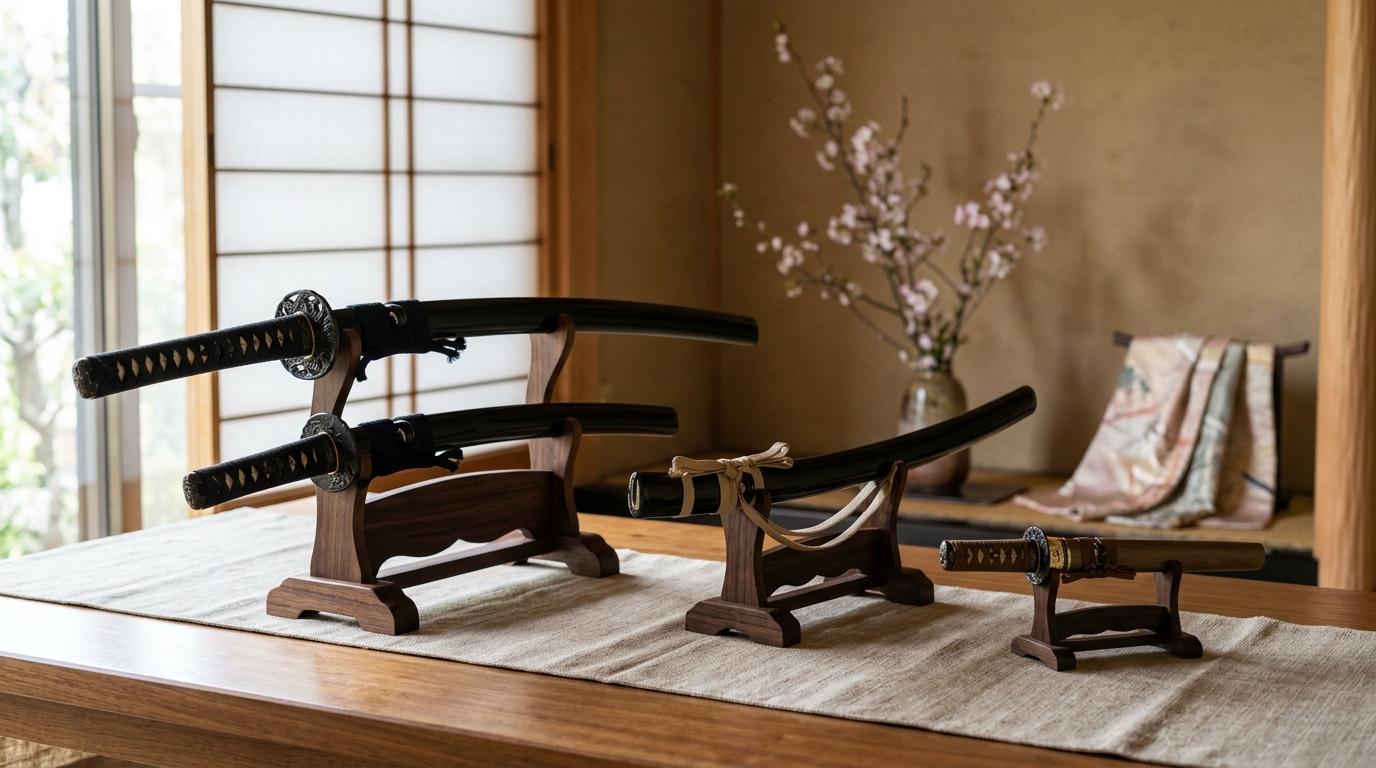
How Japanese Sword prices works
Why do Iaito prices vary so much between models like Toryumon and Suzaku?
The price gap between entry-level iaito like the Tozando Toryumon ($450–$600) and high-end custom models like the Tozando Suzaku ($800–$1,300) comes down to materials, customization, and production time. The Toryumon is designed for immediate availability and basic training durability, using standard fittings and mass-produced components. It gets you on the mat quickly without breaking the bank, making it ideal for beginners who are still determining their commitment to iaido.
In contrast, the Suzaku and Minosaka custom lines involve higher-grade zinc-aluminum alloys that better mimic the weight distribution of real steel. These swords often feature hand-fitted components, higher-quality lacquer work on the scabbard (saya), and options for specific handle lengths or curvature. Because they are built to order rather than pulled from stock, they also carry longer lead times, often around six months, reflecting the labor-intensive attention to detail that justifies the higher price tag.
How have recent tariffs affected the cost of production katana?
If you are buying from Chinese manufacturers like HanBon Forge or MoonSwords in 2026, you are likely paying significantly more than you did in previous years. A 54% import tariff on swords entering the United States went into effect on May 2, 2025. This policy change directly targets many production-grade brands that manufacture overseas to keep costs low.
As a result, prices for functional steel katana in the $200–$1,500 range have risen.
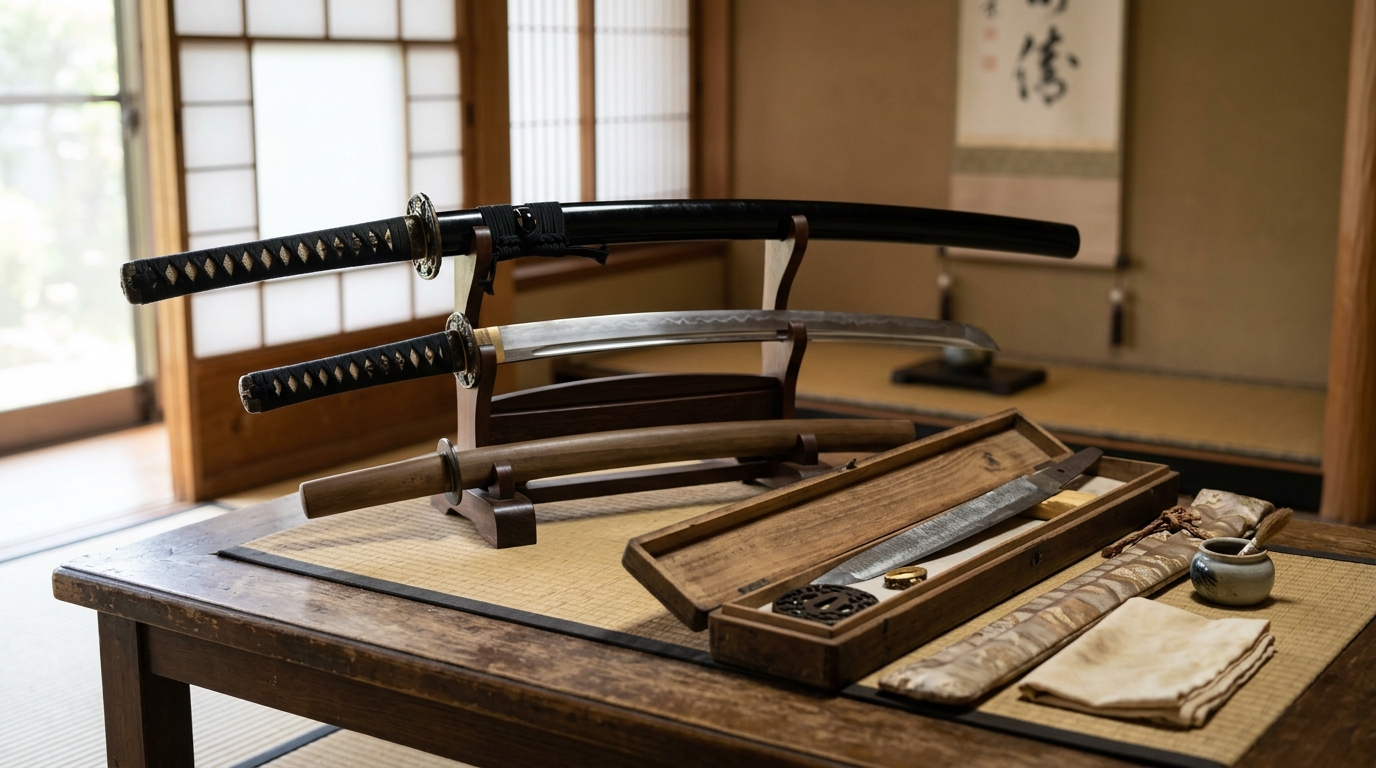
Conclusion
When it comes to Japanese swords I’d suggest you start with the 60-centimeter legal cutoff, then look at the mounting style that separates a tachi from a katana. The choice still matters: a dull iaito belongs in practice, while a pre-1953 nihonto is a collectible.
You don’t need to buy everything, but knowing what is in front of you can prevent an expensive mistake.
