Disclosure: This post contains affiliate links. If you buy through them we may earn a commission, at no extra cost to you.
Sleeping on a traditional floor mattress sounds romantic until your lower back starts screaming at 3 a.m. A shikibuton saves space and has the look you want, but it still needs to provide real support after the first month. This roundup looks at which models hold their shape, which ones feel more like thick blankets, and who each one suits.
Here is a breakdown of nine popular options available right now.
Which Japanese futon is worth your money in 2026?
EMOOR Classe
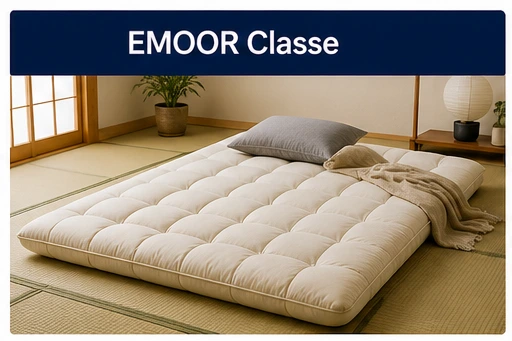
The EMOOR Classe is a sensible starting point for anyone curious about Japanese-style sleeping but unsure about a rigid traditional setup. Its feel sits between soft and hard, so it works well for first-time buyers who haven’t settled on a firmness preference. It doesn’t have the pressure-point technology found in higher-end models, but it works reliably as a standalone floor mattress or topper.
You’ll find this model on Amazon, where it suits shoppers who want a straightforward option.
EMOOR Classe III
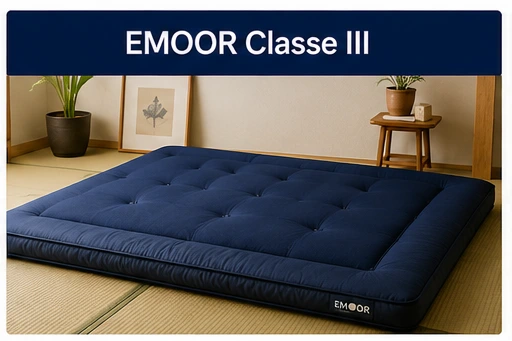
With the Classe III, EMOOR addresses the common problem of flattening by using denser, more resilient materials. The Twin size is priced between $181.12 and $199.00, while the Queen size ranges from $300.00 to $450.00, putting it in the mid-tier range. It’s available through Amazon, the EMOOR Official Global Store, which opened in late 2025, and eBay.
This model suits sleepers who want more structure and longevity than the base Classe offers, especially for nightly use.
Nishikawa AiR SI
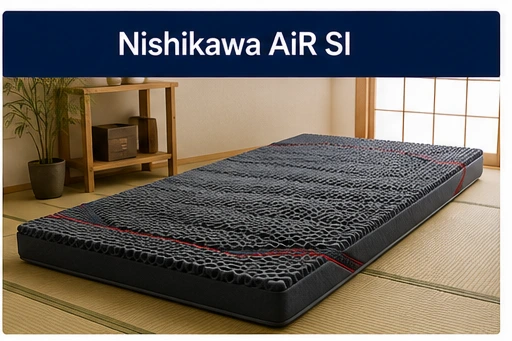
Nishikawa’s AiR SI focuses on airflow and body contouring rather than extra padding. Its three-dimensional mesh structure lets air circulate freely, which helps if you tend to overheat at night. The mattress feels supportive and responsive, adapting to the shoulders and hips without creating a hammock effect.
Available on Amazon, it suits hot sleepers who want the firmness associated with Japanese bedding along with modern temperature regulation.
Nishikawa AiR 01
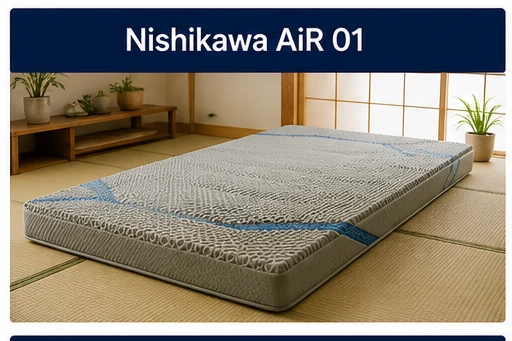
The Nishikawa AiR 01 uses the brand’s air-fiber technology with a different density profile. The result is often a softer initial feel with solid support underneath. Like its sibling, it handles moisture and ventilation well, helping prevent the clammy feeling common with traditional cotton futons. It’s available on Amazon for buyers who find the SI model too firm but still want washable, breathable synthetic fibers.
Side sleepers may prefer it for the extra pressure relief around the hips.
Nishikawa MuAtsu
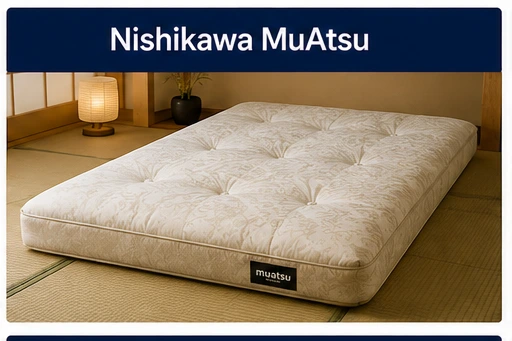
Nishikawa MuAtsu takes a different approach from the air-fiber line, combining a more traditional feel with modern materials. It focuses on heat retention and plush comfort, making it suitable for people who find standard Japanese futons too hard or cold. Listed on Amazon, it suits winter sleepers and anyone who prefers a warmer, more cushioned surface over the firmer feel of other models.
Airflow takes a back seat here to a warmer, more insulated sleep environment.
Iris Ohyama Airy Futon
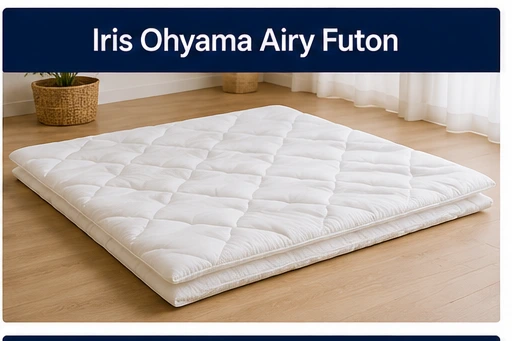
Iris Ohyama’s Airy Futon is lightweight and easy to move, with storage and maintenance taking priority over deep orthopedic support. It folds easily and is light enough to carry upstairs, so it works well in guest rooms or temporary setups. The material dries quickly and resists mold, a practical feature in humid climates.
Available on Amazon, it suits minimalists and students who need a functional sleep surface that can be stored without taking over the room.
Iris Ohyama Airy Mattress
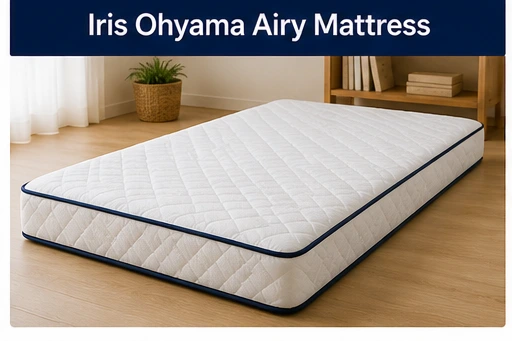
The Iris Ohyama Airy Mattress keeps the brand’s airy design but adds thickness and structure for regular nightly use. It retains the breathability and washability of the thinner futon while providing better shock absorption for heavier individuals. Available on Amazon, it sits between a simple pad and a full mattress, offering a foldable design with more separation from the floor.
It suits everyday sleepers who value hygiene and simplicity.
FULI Japanese Traditional Shiki Futon
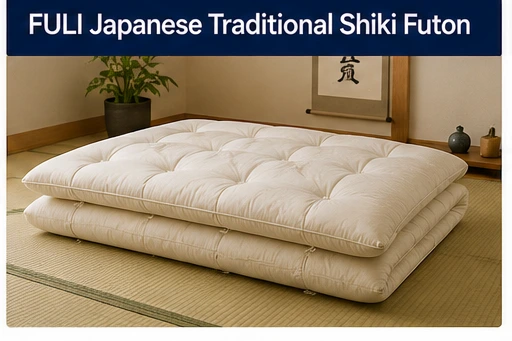
FULI’s Japanese Traditional Shiki Futon follows classic design principles, using layered cotton batting for a firm, traditional sleeping surface. The Twin size is priced between $150.00 and $170.00, while the Full size ranges from $200.00 to $230.00, making it an affordable way to try this style. It’s available through Amazon or the Fuli Japan official site.
Purists who want the feel of cotton and don’t mind keeping it fluffy and dry will get the most from this futon.
Mochi Futon 5-Layer Comfort Mattress
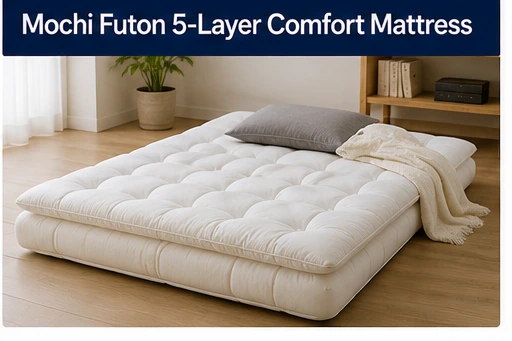
The Mochi Futon 5-Layer Comfort Mattress uses several layers to create the soft, yielding feel suggested by its name. A plush top layer cushions pressure points while the base stays stable, placing it between traditional firmness and modern comfort. Listed on Amazon, it suits sleepers who find standard futons too unforgiving but still want a low-profile design.
Choose it if immediate softness matters more to you than the firmer spinal alignment of harder models.
The main types explained
The search results confirm specific variants for only two brands. These are the options you can track down right now.
EMOOR Classe III: A mid-range option with Twin models priced at $181-$199 and Queen sizes at $300-$450. It’s available through Amazon, eBay, and the EMOOR Official Global Store, which opened in late 2025.
FULI Japanese Traditional Shiki Futon: A budget-friendly traditional style. Twin sizes cost $150-$170, while Full sizes cost $200-$230. It’s available through Amazon and the Fuli Japan official site.
How to choose
Back pain is personal, so the “best” futon depends on whether your spine needs firm support or some cushioning around pressure points. Since every option here ships from Amazon, the choice comes down to your preferred sleep feel and each brand’s design.
Choose the Nishikawa AiR line if you want high-resilience urethane that contours to your body instead of simply pushing back against it.
Opt for the EMOOR Classe models if you prefer the traditional feel of layered cotton. They provide a firmer, more even surface without the bounce of synthetic foam.
Pick the Iris Ohyama Airy options if you need a lightweight, washable futon with good airflow and easy maintenance. These prioritize convenience over deep orthopedic structuring.
Select the FULI Traditional Shiki Futon if you want a simple cotton futon that stays close to classic Japanese sleeping habits.
Go with the Mochi Futon 5-Layer Mattress if you want a modern hybrid design. Its stacked materials create a plush but supportive layer between you and the floor.
Check the model suffixes carefully. Nishikawa and EMOOR offer variations such as the AiR SI and Classe III, and their firmness levels can differ significantly.
Think about storage before choosing. Thicker hybrids such as the Mochi, along with dense urethane mats, take up more closet space than foldable cotton shikibutons.
The biggest factor is whether you trust urethane foam or natural cotton to keep your hips aligned through the night. If you can’t test the futons in person, compare the material descriptions and choose the one most likely to keep your spine neutral.
Best picks by use case
For a guest room on a strict budget, the Iris Ohyama Airy Futon is a practical choice. It sits at the entry-level price point on Amazon, so buying several won’t stretch your monthly allowance. It’s lightweight and functional for occasional use without a premium price.
Daily sleepers with back pain may prefer the Nishikawa AiR SI or the EMOOR Classe III. Both cost more on Amazon because they use pressure-dispersing materials instead of basic cotton fills. The added support is better suited to years of nightly use, especially if you often wake up stiff.
If you want the traditional tatami-room look and feel, the FULI Japanese Traditional Shiki Futon is a good fit. It’s available through Amazon and offers a firm floor-sleeping experience that differs from modern foam hybrids. Choose it if you value simplicity and a traditional style over plush, Western-style cushioning.
Things to watch out for
Before choosing a Japanese futon, check the sizing, maintenance, and shipping details. Availability can change quickly because some brands sell through third-party marketplaces, while others have recently added direct sales channels.
For international buyers, sizing usually follows US standards rather than traditional Japanese measurements. A “Twin” from EMOOR or FULI should fit a standard American frame, but its dimensions may differ from futons sold in Tokyo.
Most of these products are sold through Amazon or official global websites, such as the EMOOR Official Global Store, which launched in late 2025, and the Fuli Japan official site. Big-box physical retailers are less common.
Prices vary by size and brand. Entry-level options such as the FULI Traditional Shiki Twin cost about $150 to $170, while premium models such as the EMOOR Classe III Queen can reach $450.
Traditional shiki futons, including the FULI model, need regular airing and folding to prevent moisture buildup and preserve their loft. Modern foam or hybrid mattresses, such as the Iris Ohyama Airy series, generally require less maintenance.
FAQ
What is the actual difference between a traditional shiki futon and the newer air-mattress styles?
The core distinction lies in construction and feel. A product like the FULI Japanese Traditional Shiki Futon represents the classic approach, relying on layered filling to provide that authentic, firm floor-sleeping experience. It is designed for purists who want the genuine cultural aesthetic and don’t mind a heavier, denser pad.
In contrast, models such as the Iris Ohyama Airy Futon or the Nishikawa AiR series use modern synthetic materials to create airflow and reduce weight. These are engineered for breathability and easier handling, often appealing to those who find traditional cotton too heavy or prone to retaining moisture. You are essentially choosing between heritage comfort and contemporary convenience.
Are these futons suitable for side sleepers who need more cushioning?
It depends heavily on the specific model you choose. Traditional options like the FULI Shiki Futon tend to be quite firm, which can put pressure on hips and shoulders for side sleepers. If you need relief in those areas, you might look toward layered designs like the Mochi Futon 5-Layer Comfort Mattress, which explicitly builds in multiple layers to soften the sleeping surface.
The Nishikawa MuAtsu and AiR lines also offer variations in firmness, with some models designed to contour better than a flat cotton pad. However, since most Japanese futons prioritize spinal alignment over plush sinking, side sleepers should carefully check if a specific model mentions pressure relief or multi-layer construction before buying.
How do I know if a futon will be too heavy to move or air out?
Weight is a major practical consideration that often catches buyers off guard. Traditional cotton-filled futons, such as the FULI Japanese Traditional Shiki Futon, are significantly heavier than their synthetic counterparts. If you plan to fold and store your bedding daily or hang it out to air in sunlight, this weight can become a genuine chore.
Lighter alternatives like the Iris Ohyama Airy Mattress or the EMOOR Classe series are built with materials that prioritize portability. These are much easier to maneuver around small apartments or lift into closets. If ease of maintenance is your top priority, steer clear of the dense traditional fills and opt for the modern air-style or lightweight layered options.
Can I use these mattresses on a standard Western bed frame?
You can, but it changes how they perform. Japanese futons like the Nishikawa AiR SI or EMOOR Classe III are engineered primarily for solid floors or slatted bases with very narrow gaps. Placing them on a standard box spring might void warranties or cause sagging if the support isn’t uniform enough for their specific design.
If you intend to use one on a Western frame, ensure the slats are close together or use a solid platform base. Models like the Mochi Futon 5-Layer Comfort Mattress may adapt slightly better due to their internal structure. Always verify that your bed base provides continuous support rather than wide gaps that could damage the futon’s integrity over time.
Conclusion
If you need firm orthopedic support, the Nishikawa AiR SI is the strongest choice. The EMOOR Classe offers a more balanced feel for average sleepers, while the Iris Ohyama Airy line gives budget shoppers solid value. Traditionalists should stick with the FULI Japanese Traditional Shiki Futon.
Choose based on your spine’s needs, not just the price.
